
Travel Guide
The Qaitbay Citadel of Alexandria
11 min read
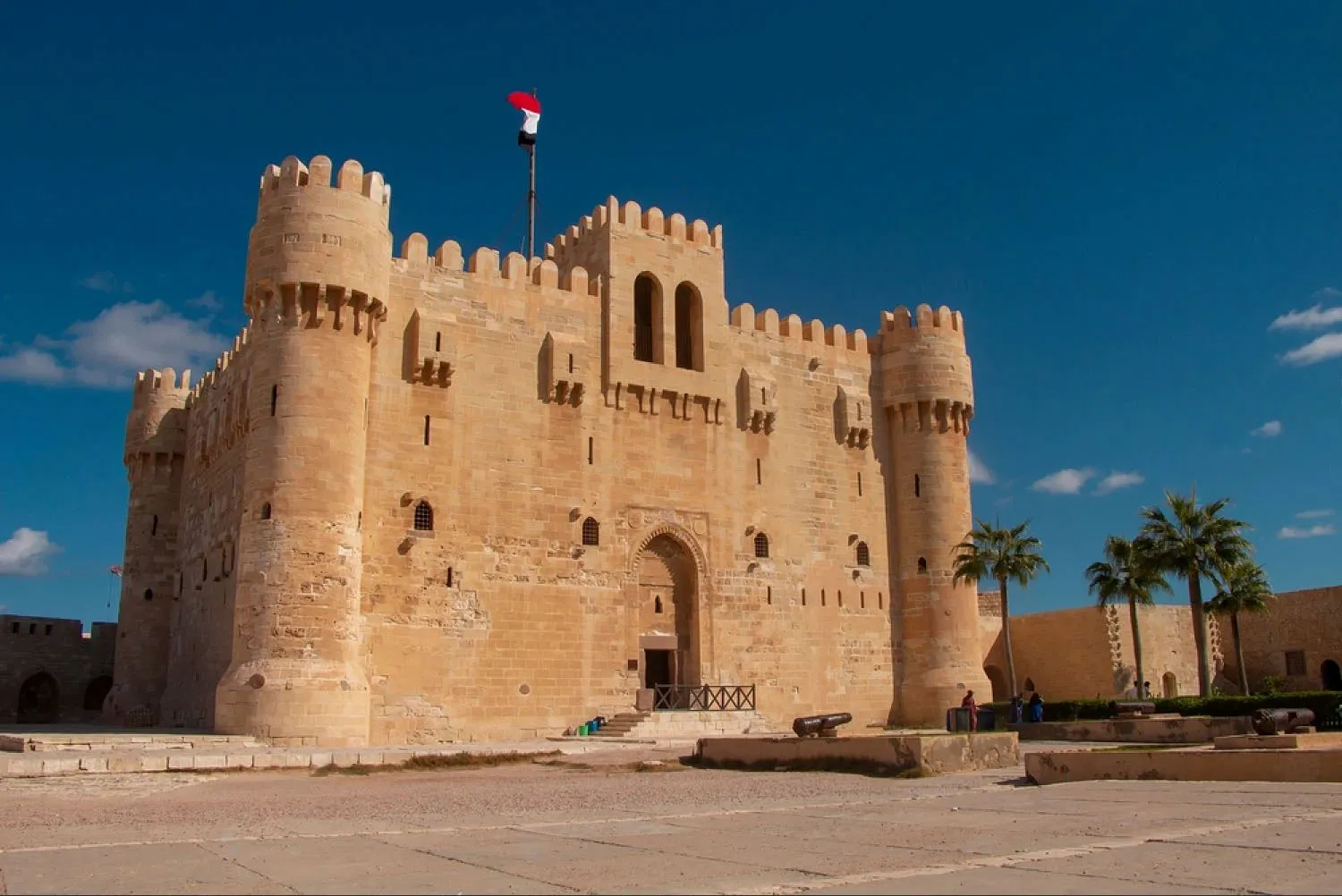
Nestled on the eastern edge of Alexandria’s Mediterranean coastline, the Qaitbay Citadel stands as a breathtaking testament to Egypt’s rich history, geopolitical strategic value, and architectural prowess. This formidable 15th-century fortress does not merely protect the city’s historic shores; it serves as a living, breathing open-air museum. Within its limestone walls lie layered narratives of ancient wonders, medieval naval battles, royal ambitions, and strategic military genius.
The citadel’s commanding presence over the Mediterranean waters and its timeless aesthetic symmetry continue to captivate international travelers, historians, and architecture enthusiasts alike. For anyone curating an itinerary around premier Alexandria attractions, this iconic monument represents an essential chapter in understanding Egypt’s maritime legacy.
A Legacy Built on Ruins
To fully appreciate the structural and historical gravity of the Qaitbay Citadel, one must look beneath its foundations. Constructed between 1477 and 1479 AD by the Burji Mamluk Sultan Al-Ashraf Sayf ad-Din Qaitbay, the fortress was strategically erected upon the exact ruins of the legendary Pharos Lighthouse. The Pharos Lighthouse was celebrated as one of the Seven Wonders of the Ancient World, a towering beacon of classical engineering that guided ancient mariners for centuries before being progressively crippled by a series of devastating earthquakes between the 11th and 14th centuries.
By the late 15th century, the remnants of the lighthouse lay as a massive field of fallen granite and limestone blocks on the northern tip of Pharos Island. Sultan Qaitbay recognized both the profound symbolic value and the undeniable logistical utility of this location. The fall of Constantinople to the Ottoman Empire in 1453 had fundamentally shifted the balance of power in the Eastern Mediterranean. Facing an increasingly aggressive Ottoman naval presence, Egypt required an impregnable defensive bastion to safeguard its primary Mediterranean port.
Sultan Qaitbay ordered the immediate construction of a defensive fort. Crucially, the architects and builders did not just clear the ancient debris; they incorporated the massive, high-quality stone blocks of the fallen Pharos Lighthouse directly into the citadel's foundations and core walls. This act of architectural structural recycling permanently linked two distinct eras of Egyptian history. The resulting stronghold became a powerful symbol of Alexandria’s resilience, standing firm through subsequent centuries of Mamluk defenses, Ottoman modifications, and even the geopolitical upheavals of Napoleon Bonaparte’s late 18th-century French expedition.
The Historical Role of Qaitbay Citadel
The historical trajectory of the Qaitbay Citadel reflects the broader geopolitical shifts of Egypt and the wider Mediterranean basin across more than half a millennium. Following its completion in 1479, the fortress immediately assumed its role as the centerpiece of Egypt’s northern maritime defense strategy. During the twilight of the Mamluk Sultanate, the citadel was continuously staffed with elite garrisons, serving as an early-warning system and a heavy artillery platform designed to deny enemy fleets entry into Alexandria’s vital Eastern Harbor.
When Egypt fell under Ottoman rule in 1517, the strategic value of the citadel remained undisputed. The Ottomans restructured the internal organization of the fortress, dividing its defense among distinct military corps, including the Janissaries. They modified the battlements to accommodate advancing firearms and heavier artillery. As the centuries progressed and the Ottoman central authority waned, the citadel suffered periods of logistical neglect, yet its geographic positioning ensured it was re-fortified whenever regional tensions escalated.
In 1798, during the French invasion of Egypt, the citadel fell into French hands. Napoleonic military engineers recognized its exceptional design, using it as a central base to control the coastline and modifying certain structural elements to fit late-18th-century artillery tactics.
The 19th century brought a massive renaissance for the fortress under the visionary rule of Muhammad Ali Pasha, the founder of modern Egypt. Recognizing the vulnerability of the country's northern coast to European naval powers, Muhammad Ali initiated an extensive restoration project. He rebuilt the damaged northern coastal walls, reinforced the battlements, and installed the latest smoothbore coastal defense cannons.
The citadel's purely military function finally concluded in the late 19th century. During the nationalist Orabi Revolt of 1882, the British Mediterranean Fleet subjected Alexandria to an intense naval bombardment. The citadel sustained significant structural damage to its seaward facades. Following this conflict, the fort was largely abandoned by active military units, clearing the way for its 20th-century transition. The Egyptian Comité de Conservation des Monuments de l'Art Arabe undertook comprehensive, historically accurate restorations to transform this battle-hardened fortress into the cultural monument seen today.
The Most Famous Users of the Castle
Throughout its long history, the Qaitbay Citadel has hosted, housed, and been shaped by some of the most influential political and military figures in Near Eastern history. These individuals utilized the fort not just as a defensive structure, but as a statement of sovereignty, a royal retreat, or a critical strategic headquarters.
Sultan Al-Ashraf Qaitbay
The visionary founder of the fortress, Sultan Qaitbay, was one of the most prolific builders of the Mamluk era. His reign was marked by a distinct architectural revival across Egypt and Syria. Qaitbay personally visited Alexandria to inspect the progress of the construction, staying within the perimeter and ensuring that the fort was supplied with the finest materials and the most capable builders of the era.
Sultan Al-Ashraf Qansuh Al-Ghawri
In the early 16th century, as the Ottoman threat loomed larger, Sultan Al-Ghawri recognized that Alexandria was Egypt’s frontline defense. He visited the Qaitbay Citadel with his royal court and court historians. Al-Ghawri issued strict royal decrees regarding the maintenance of the fort, ordered a massive update of its ammunition and weaponry caches, and decreed that any soldier who neglected their post at Qaitbay would face severe punishment. His focus turned the citadel into a highly disciplined military installation.
Napoleon Bonaparte
During the French Campaign in Egypt and Syria, Napoleon viewed the Qaitbay Citadel as a vital asset for maintaining French control over the Mediterranean gateway. French generals and engineers under his command occupied the keep, adapting its layout to serve as an officer quarters and an observation outpost to monitor the British Royal Navy fleet patrolling the coast.
Muhammad Ali Pasha
The great modernizer of Egypt utilized the citadel as a key component of his sweeping national military restructuring. He spent considerable state revenue restoring the fort, frequently visiting Alexandria to view the installation of modern coast guard batteries along its outer perimeter. Under his direction, the castle became a training ground for the newly modernized Egyptian military forces.
Architectural Brilliance
From an engineering and architectural standpoint, the Qaitbay Citadel is a masterclass in late-medieval Islamic military design. It demonstrates a highly sophisticated understanding of spatial layout, defensive geometry, and material durability. The entire complex is built out of durable local limestone, carefully dressed to form smooth, tightly fitting surfaces capable of absorbing and deflecting kinetic impacts from naval artillery.
The fortress features a concentric design composed of two distinct defensive lines: the outer curtain wall and the inner wall system.
The Outer Walls: Extending nearly 150 meters in length along its primary axes, the outer defensive wall is fortified with rounded bastion towers. These curved structures were intentionally designed to eliminate blind spots for defenders and safely deflect incoming cannon fire away from the core structures.
The Inner Walls: Situated parallel to the outer defenses, this secondary wall layer provided a fallback position for guards if the primary perimeter was ever breached.
The Main Gate: The primary entrance to the citadel is an architectural marvel in itself, featuring intricate Islamic geometric block carvings. It was constructed with an angled, indirect entry design a classic medieval defensive tactic that prevented rams from building up straight-line momentum against the wooden doors.
At the literal and figurative heart of the complex is the Keep. This massive, square three-story tower stands proudly in the northeastern corner of the inner courtyard. It functioned as the ultimate redoubt, the command headquarters, and the residence for the governor of the garrison. The walls of the keep are incredibly thick, measuring over two meters in some sections, providing absolute security for its inhabitants.
Key Sections of Qaitbay Citadel
When exploring the expansive layout of the citadel, visitors encounter a thoughtfully designed series of spaces that balanced intense military utility with daily residential life for hundreds of stationed troops.
The Ground Floor and the Citadel Mosque
Upon entering the main keep, visitors are greeted by a surprisingly serene prayer hall. The citadel incorporates a fully functioning historical mosque, built following the classic Mamluk cruciform architectural plan, featuring an open central space surrounded by vaulted halls (iwans). This space served the spiritual needs of the garrison, blending martial fortitude with religious devotion. The ground floor also houses a vast subterranean water cistern, engineered to collect and store freshwater, ensuring the fort could withstand prolonged naval blockades.
The Second Floor: Barracks and Strategic Corridors
The second level is a labyrinth of stone corridors, storage chambers, and military barracks. Here, soldiers slept, maintained their equipment, and kept watch. The outer walls of this level are punctuated by precisely carved arrow slits and early firearm loops, allowing defenders to fire down upon attackers while remaining completely protected behind heavy limestone casing.
The Third Floor: The Command Post
The top level of the keep housed the Sultan’s private quarters and the defensive command center. From this elevated platform, military governors enjoyed panoramic views of the open Mediterranean Sea and the entire city of Alexandria. Today, this level offers some of the most striking photography viewpoints in the region, showcasing the contrast between the historic stone fortifications and the deep blue of the sea.
What Makes Qaitbay Citadel Unique?
The Architectural Continuity of a Wonder: The Qaitbay Citadel remains unique primarily because it represents a direct physical and spatial continuation of the ancient Pharos Lighthouse. To touch the deep foundation blocks of the citadel is to touch the actual stones of a lost ancient wonder.
Beyond its material history, the fort is unique in how it blends high-level Mamluk military engineering with the delicate beauty of Islamic art. Unlike many European medieval castles that can feel stark and purely utilitarian, Qaitbay incorporates decorative stone moldings, elegant marble inlays, and sophisticated geometry into its defensive structures. Furthermore, its geographical positioning at the narrow entrance of the Eastern Harbor gives it an unmatched seaside setting, making it a beautiful visual landmark where historical architecture meets natural marine beauty.
Fascinating Facts About Qaitbay Citadel
Ancient Stones: Many of the massive red granite pillars and limestone blocks visible in the inner sections of the fort were salvaged directly from the ruins of the Pharos Lighthouse.
Strategic Orientation: The entire layout of the fort was specifically angled to maximize the defensive range of Mamluk trebuchets and early cannons against incoming naval vessels entering the harbor.
A Hidden Mosque: It holds one of the oldest surviving coastal military mosques in Egypt, preserving its original architectural footprint despite centuries of foreign occupations.
Restoration Accuracy: The extensive renovations completed in the 20th century used original Mamluk construction techniques and local limestone quarrying to ensure historical authenticity.
How Desert Cruise Makes Your Visit to Qaitbay Citadel Unforgettable
Exploring a monument as layered and historically dense as the Qaitbay Citadel requires expert context to truly appreciate the subtleties of its architecture and history. Desert Cruise Travel elevates your historical exploration from a standard sightseeing stop into an immersive journey through time.
Expert Historical Storytellers: Desert Cruise pairs you with highly knowledgeable, licensed Egyptologists who specialize in Alexandria's history. Instead of just viewing stone walls, you will hear riveting stories of Mamluk sultans, naval strategies, and the day-to-day lives of the soldiers who guarded the coast.
Seamless Logistics and Transport: Navigating Alexandria’s coastal traffic is entirely managed for you. Desert Cruise provides premium, climate-controlled private transfers from your hotel or cruise ship directly to the citadel’s entrance, eliminating logistics stress.
Curated Photographic Excursions: Guides know the exact timing and vantage points within the citadel to capture optimal lighting, including exclusive spots to view the sun setting over the Mediterranean behind the fortress walls.
With a dedicated focus on comfort, historical depth, and personalized attention, Desert Cruise Travel ensures that your visit to the Qaitbay Citadel and surrounding Alexandria attractions becomes a highlighted memory of your travel experience in Egypt.
Frequently Asked Questions
- When was Qaitbay Citadel built, and why?
The Qaitbay Citadel was constructed between 1477 and 1479 AD by Sultan Al-Ashraf Qaitbay. It was built to establish a powerful maritime defense system against the growing naval threat of the Ottoman Empire, protecting Egypt’s primary Mediterranean trading port.
- Can visitors go inside the main tower (Keep)?
Yes, visitors can fully explore all accessible levels of the main keep, including the historic mosque on the ground floor, the defensive corridors on the second floor, and the observation platforms on the top level that offer panoramic views of Alexandria’s coastline.