
Travel Guide
Ultimate Grand Egyptian Museum Tours: The Definitive 2026 Visitor's Guide
10 min read
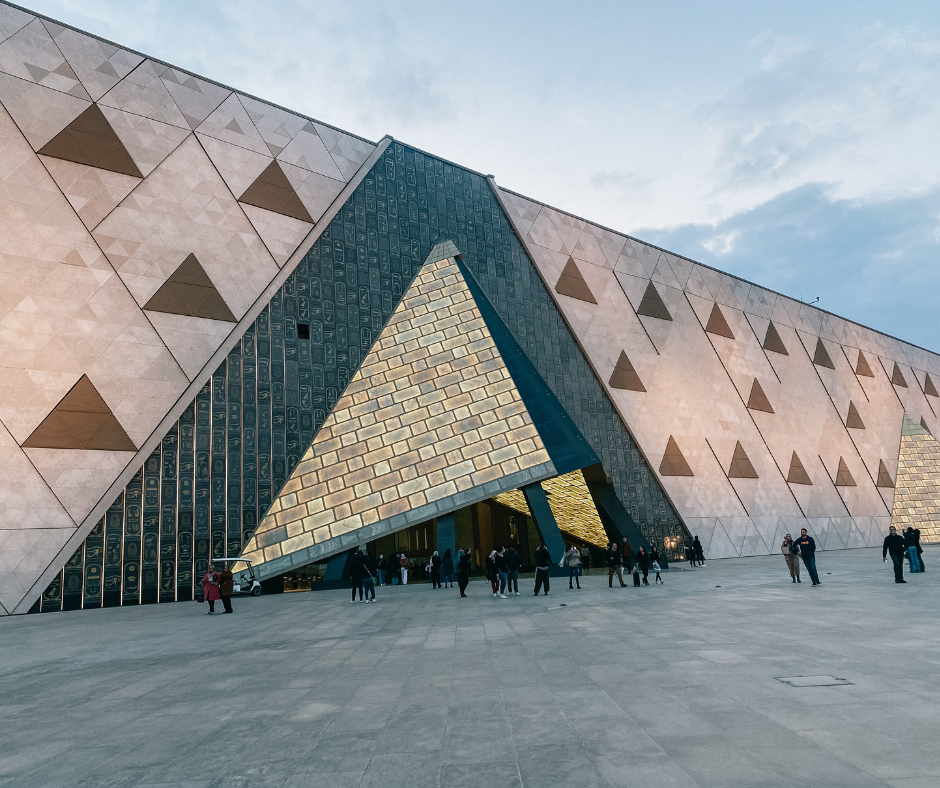
The Grand Egyptian Museum (GEM) is a modern global wonder and the largest archaeological institution in the world dedicated to a single, continuous civilization. Spanning a massive 500,000 square meters on the Giza plateau just two kilometers from the Great Pyramids this $1 billion architectural masterpiece serves as a chronological gateway connecting 5,000 years of Pharaonic history. By blending cutting-edge 21st-century technology with priceless historical artifacts, the museum offers an unparalleled cultural experience that brings the ancient world vividly to life.
For international travelers and cultural enthusiasts, booking official Grand Egyptian Museum tours has quickly become the ultimate highlight of any Egyptian holiday. The ultra-modern, climate-controlled inner spaces are designed to house over 100,000 ancient artifacts, including more than 51,000 pieces meticulously relocated from across Egypt's most famous archaeological zones. From prehistoric pottery and Old Kingdom sarcophagi to the legendary, fully consolidated treasures of King Tutankhamun, the museum's layout transforms standard historical viewing into an unforgettable, immersive narrative.
Whether you are planning to visit independently or join one of the highly sought-after guided Grand Egyptian Museum tours, understanding the spatial layout, technical design, and logistical flow of the museum is essential. This comprehensive guide provides an inside look at the engineering secrets, gallery structures, and up-to-date 2026 travel logistics you need for a flawless visit to this monumental landmark.
Why Grand Egyptian Museum Tours are a Global Phenomenon
Stepping into the main complex instantly reveals why demand for specialized Grand Egyptian Museum tours has broken tourism records worldwide. The core design concept, engineered by the award-winning Irish firm Heneghan Peng Architects, centers around "lines of sight," creating a direct, unbroken visual connection between the modern museum galleries and the ancient Giza Pyramids situated on the immediate horizon.
The interior spaces are characterized by soaring, cavernous ceilings, massive translucent stone walls made of Egyptian alabaster, and geometric glass curtains that flood the public plazas with natural, filtered sunlight.
The spatial acoustics and wide walking axes are highly optimized to accommodate more than 15,000 visitors per day without ever feeling overcrowded or chaotic. As a purpose-built structure, the inner layout gracefully guides visitors on a literal climb through time, using vertical elevation to mirror the historical progression of Egypt's ancient dynasties. This intentional layout makes organized Grand Egyptian Museum tours feel less like a traditional museum walk and more like a theatrical journey through ancient time.
The Grand Atrium: Opening Highlights of the Tour
The primary focal point that greets visitors embarking on Grand Egyptian Museum tours is the Grand Atrium, a massive, multi-level entrance plaza that instantly sets the scale for the entire museum experience.
The 83-Ton Statue of Ramses II
Standing as the central pivot of the entire atrium is the magnificent, 3,200-year-old colossal statue of King Ramses II. Carved out of a single block of pink granite, this 11-meter-high, 83-ton masterpiece was carefully relocated from Ramses Square in downtown Cairo in a legendary, hyper-precise engineering procession. The atrium’s ceiling was constructed specifically around the statue, allowing calculated beams of sunlight to illuminate the pharaoh’s face twice a year on February 21st and October 21st perfectly replicating the solar alignment phenomenon originally engineered at the Abu Simbel Temples. Seeing this monument up close is the traditional starting point for most premium Grand Egyptian Museum tours.
The World's First Hanging Obelisk
Positioned just outside the main glass entrance to the atrium is the famous Hanging Obelisk, a world-first engineering feat. The 3,000-year-old stone obelisk of Ramses II is elevated upon four massive steel columns over a transparent glass floor. This unique design allows visitors on Grand Egyptian Museum tours to walk directly underneath the monument to view the royal cartouche of King Ramses II engraved on its base—an intricate inscription that had remained completely hidden from human eyes for millennia.
The Grand Staircase: A Vertical Chronology
Connecting the open public atrium to the high-security exhibition galleries is the spectacular Grand Staircase (also known as the Chronological Staircase). This monumental vertical gallery stretches 60 meters long and climbs up six separate levels, serving as a physical and historical transition zone that forms a core component of most guided Grand Egyptian Museum tours.
As you ascend the staircase, you pass a curated procession of 87 royal statues and architectural elements arranged in strict chronological order. The staircase is divided into four primary thematic zones:
The Royal Image: Displaying massive statues that demonstrate how pharaohs projected their divine power to the public.
Divine Places: Showcasing columns, capitals, and false doors salvaged from ancient temples and royal tombs.
The King and the Gods: Focusing on intricate stone groups where pharaohs interact directly with deities like Amun, Isis, and Osiris.
The Journey to the Afterlife: Culminating at the top of the stairs with beautifully carved stone sarcophagi, pointing toward the eternal realm.
The top of the Grand Staircase opens up to a breathtaking, panoramic glass observatory deck that frames the three Pyramids of Giza in a single, jaw-dropping view—a favorite photography stop on all Grand Egyptian Museum tours.
The Tutankhamun Galleries: The Ultimate Tour Destination
The absolute crown jewel of all Grand Egyptian Museum tours is the massive, high-security wing dedicated exclusively to King Tutankhamun. For the first time since British archaeologist Howard Carter discovered the intact tomb in the Valley of the Kings in 1922, the complete 5,000-piece treasure collection is displayed together in one single location.
The Tutankhamun galleries occupy two massive, state-of-the-art exhibition halls that utilize interactive storytelling, augmented reality, and highly advanced museum technology. Experienced guides on official Grand Egyptian Museum tours walk visitors through the boy king's life, death, and afterlife journey in unparalleled detail. The exhibition covers:
The Golden Mask and Sarcophagi: The iconic, solid-gold burial mask inlaid with semi-precious stones is housed in a high-security inner chamber under specialized lighting.
Royal Chariots and Weapons: His fully restored gold-leaf hunting chariots, composite bows, and ceremonial daggers are displayed to show the military might of the New Kingdom.
Daily Life Artifacts: Surprisingly personal items, including the king's childhood linen clothes, sandals, game boards (Senet), golden beds, and even fossilized food items buried to feed his soul in the afterlife.
The Relocation of the Khufu Solar Boat
In addition to the traditional gallery spaces, premium Grand Egyptian Museum tours seamlessly integrate a massive, specialized wing built specifically to house the Khufu Solar Boat.
This 4,500-year-old vessel, constructed entirely of imported Lebanese cedar wood without a single metal nail, is the oldest intact ship in human history. It was excavated in pieces near the base of the Great Pyramid of Khufu in 1954. Moving the fragile, 43-meter-long boat from its old site to the GEM required a monumental engineering effort. It was transported inside a custom-engineered, remote-controlled, shock-absorbent container to protect the ancient timber from vibration and humidity changes. The dedicated Solar Boat building allows visitors on specialized Grand Egyptian Museum tours to view the magnificent vessel from three different levels, providing an up-to-close look at the ancient naval engineering used by the pyramid builders.
Technical Secrets of the Museum's Inner Spaces
Behind the stunning aesthetic design of the museum lies an incredibly complex network of preservation technology. Those joining informational Grand Egyptian Museum tours will learn how the facility operates like a highly advanced scientific conservation lab to protect Egypt's fragile organic artifacts from decay.
Micro-Climate Display Cases: All display cases in the Tutankhamun wing were custom-designed by elite German engineering firms. These bulletproof, ultra-clear glass cases are hermetically sealed and equipped with internal sensors that maintain a fixed relative humidity and temperature, preventing the expansion or deterioration of ancient wood, leather, and textiles.
Cold LED Illumination: To prevent the fading of 3,000-year-old painted papyrus and gilded statuary, the entire interior uses an advanced "Cold LED" lighting grid. These specialized lights emit absolute zero ultraviolet (UV) or infrared radiation.
AI Surveillance and Fire Suppression: Security is managed 24/7 by a multi-layered artificial intelligence system integrated with facial-recognition cameras. To protect delicate artifacts from accidental water damage, the fire suppression system inside the galleries relies on clean, non-toxic gas instead of traditional water sprinklers.
Comparing the GEM to the Historic Tahrir Museum
To fully appreciate why booking Grand Egyptian Museum tours is an entirely different experience from visiting old historical sites, it is helpful to compare its state-of-the-art infrastructure with the classic, historic Egyptian Museum in Tahrir Square:
| Feature | The Egyptian Museum (Tahrir Square) | The Grand Egyptian Museum (GEM) |
| Total Exhibition Area | Approximately 15,000 square meters | Over 500,000 square meters |
| Tutankhamun Collection | Selected highlights only (approx. 1,500 pieces) | The complete collection (5,000+ pieces) |
| Climate Control & Tech | Traditional fans, basic glass displays | Intelligent micro-climates, AI, and AR integration |
| Visitor Layout | Atmospheric but crowded; warehouse-style | Spatially optimized, chronological, and scannable |
| Tour Experience | Classical, self-guided text plaques | Immersive, interactive Grand Egyptian Museum tours |
Official Ticket Pricing Structure
| Visitor Category | Standard Gallery Ticket (EGP) | Estimated Cost (USD) |
| Foreign Adult | 1,450 EGP | ~$30 USD |
| Foreign Student (With Physical ISIC) | 730 EGP | ~$15 USD |
| Foreign Child (Ages 6–12) | 730 EGP | ~$15 USD |
| Egyptian Adult | 200 EGP | ~$4 USD |
| Children Under 6 / Disabled Visitors | Free | Free |
Seasonal Opening Hours
The museum adapts its operating hours based on regional seasonal demands to optimize the indoor and outdoor guest experiences:
High Season (October to April): Daily from 9:00 AM to 9:00 PM (Last entry ticket slot sold for 7:30 PM).
Low Season (May to September): Daily from 9:00 AM to 5:00 PM (Last entry slot at 4:00 PM).
Ramadan Hours: During the holy month of fasting, the museum operates on a compressed schedule from 9:00 AM to 3:00 PM
Frequently Asked Questions
- What is included in standard Grand Egyptian Museum tours?
- Can I take photos during Grand Egyptian Museum tours?
- How much time should I allocate for Grand Egyptian Museum tours?
Due to the massive scale of the complex, you should allocate a minimum of 4 to 6 hours to view the main highlights comfortably. Trying to rush through the complex in less than three hours will result in missing major chronological sections.
Conclusion
The Grand Egyptian Museum represents an unprecedented leap forward in cultural preservation and global tourism. By creating a visually stunning, technologically advanced home for the ancient world, Egypt has established a monument that is just as historic as the pyramids standing beside it. Navigating this 21st-century wonder—from walking under the elevated Hanging Obelisk to exploring the gold-filled halls of Tutankhamun—offers an unforgettable window into human genius. For any traveler stepping onto Egyptian soil, booking professional Grand Egyptian Museum tours is an absolute necessity to unlock the full, magical story of the Pharaohs.