
Travel Guide
A Complete Guide to the Mosque of Amr ibn al-As: Egypt’s Oldest Mosque
11 min read
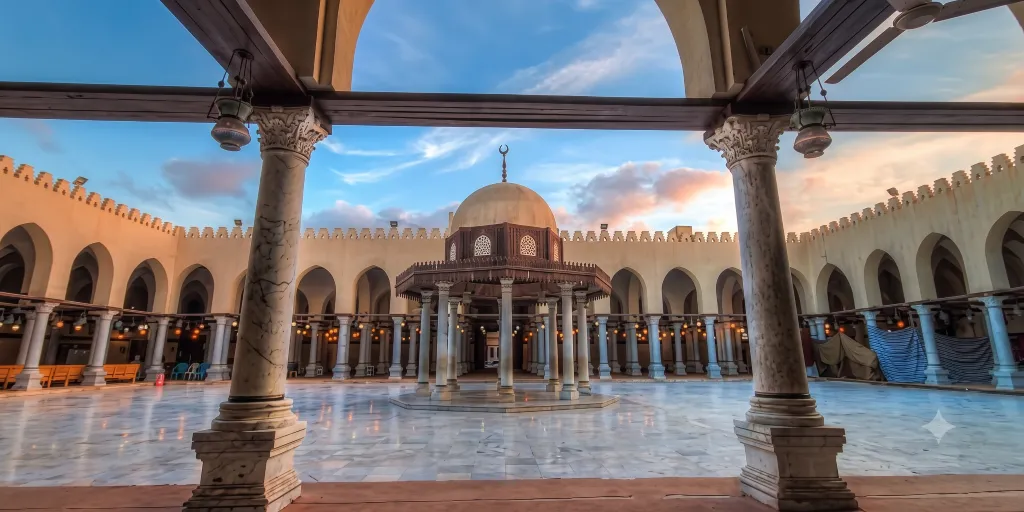
When you step away from the towering pyramids and lose yourself in the historic, winding alleys of Old Cairo, you are bound to discover a monument that forever changed the course of North African history. Entering the Amr ibn al-As Mosque is not just a typical tourist stop; it is a profound journey into the very genesis of Islamic history in Egypt and the entire African continent. Founded in 641 AD (21 AH), this sprawling sanctuary stands proudly as the first and oldest surviving mosque in Egypt.
Originally built as a humble structure constructed from mud-brick and palm trunks, the Mosque of Amr ibn al-As has survived the sweeping tides of empires, devastating fires, and earthquakes. Today, it stands as a majestic chronicle of Islamic architecture, carrying the physical scars and glorious embellishments of multiple dynasties. Whether you are an architecture enthusiast, a history buff, or a traveler seeking a moment of peace amidst the chaotic energy of Cairo, visiting the Amr ibn al-As Mosque is an absolute must. This comprehensive guide will walk you through exactly how to plan your visit, before diving deep into the rich tapestry of its architectural and cultural legacy.
Architectural Evolution Through the Ages
The Mosque of Amr ibn al-As that you walk through today is a striking departure from its humble 7th-century origins. As the Muslim population in Fustat surged, the original palm-trunk and mud-brick sanctuary became woefully inadequate. Over the centuries, the site became a living canvas, with nearly every major Islamic dynasty leaving its distinct architectural signature on the complex.
Umayyad and Abbasid Enhancements
The Umayyad Expansion (673 AD): Recognizing the need for a larger gathering space, the Umayyad governor of Egypt demolished the modest original structure and rebuilt it on a grander scale. Most notably, this era introduced a revolutionary feature: the minaret. Four simple, square towers were added to the corners of the mosque, establishing an architectural precedent that would eventually define Cairo’s iconic skyline.
The Abbasid Enlargement (827 AD): When the Abbasid Caliphate took control, Caliph al-Mamun ordered the mosque's footprint to be doubled. This period also marked a significant upgrade in structural durability and sophistication. The original wooden pillars were systematically replaced with robust stone and marble columns, many of which were salvaged from older Roman and Byzantine ruins scattered across Egypt.
Fatimid, Ayyubid, and Mamluk Restorations
Fatimid Embellishments: Even after the Fatimids established their own grand capital to the north (Al-Qahira), they continued to revere and upgrade the venerable Mosque of Amr ibn al-As. They infused the interior with luxury, adding intricate stucco carvings and masterful woodwork. The mihrab (prayer niche) was elevated with gleaming gilded mosaics and rich marble paneling, while a massive silver chandelier was suspended to illuminate the prayer hall during the holy month of Ramadan.
Saladin’s Rescue (1172 AD): In 1168 AD, the vizier of Egypt ordered Fustat to be intentionally burned to prevent it from falling to invading Crusaders. The fire raged for over fifty days, severely ravaging the mosque. Just four years later, the legendary Sultan Saladin (Salah ad-Din) initiated a massive reconstruction project to resurrect the monument from the ashes.
Mamluk Reinforcements: The renowned Mamluks later left their mark following a devastating 14th-century earthquake. They rebuilt collapsed arcades, stabilized the weakened foundations, and introduced their signature decorative flourishes to the rebuilt sections.
Modern Preservation Projects
By the 18th century, the historic mosque had once again succumbed to severe neglect. Its lowest point arguably came during the brief French occupation of Egypt when Napoleon's troops reportedly utilized the sacred space as a horse stable.
The structure was ultimately saved from total collapse in the late 19th and early 20th centuries through extensive restoration campaigns ordered by the Egyptian ruler Abbas Helmi II. Today, the Egyptian Ministry of Tourism and Antiquities meticulously oversees the site's preservation. Their ongoing efforts ensure that the historical integrity of the Mosque of Amr ibn al-As is protected, while it simultaneously remains a safe, highly functional spiritual sanctuary for thousands of daily worshippers.
Cultural and Religious Significance
Beyond its structural grandeur, the Amr ibn al-As Mosque holds a profound place in the spiritual and intellectual fabric of the Islamic world.
A Center of Scholarship
Long before the world-renowned Al-Azhar Mosque rose to prominence, the Mosque of Amr ibn al-As served as the premier university of the Islamic world. It was a vibrant hub for halaqas—intellectual study circles—where scholars gathered to debate theology, jurisprudence, and grammar. Among its most distinguished residents was Imam Al-Shafi'i, the visionary founder of one of the four major schools of Sunni Islamic jurisprudence, who imparted his wisdom within these very halls.
Symbol of Enduring Faith
For nearly 1,400 years, the call to prayer has echoed from this site, marking it as a living, breathing monument to devotion. Widely regarded as the fourth most important mosque in the Islamic world—following the holy sites in Mecca, Medina, and Jerusalem—it holds this prestige primarily as the launchpad for the spread of Islam across the African continent. Today, it remains a bustling sanctuary, particularly vibrant during Friday prayers and the holy nights of Ramadan.
A Crossroads of Heritage
The mosque’s location within the Multi-Religious Compound of Old Cairo is a testament to Egypt's history of pluralism. Situated only steps away from the historic Hanging Church and the Ben Ezra Synagogue, the Amr ibn al-As Mosque stands as a powerful symbol of coexistence. Historically, Fustat served as a cosmopolitan melting pot where Muslims, Christians, and Jews traded and lived side-by-side, a legacy that continues to define the spirit of this unique area.
Visiting Old Cairo’s Historic Gem
When visiting, allow yourself time to wander through the "forest" of mismatched marble columns that support the arcades—a visual history of Egypt’s reused architectural elements. Find a quiet corner in the expansive open courtyard to soak in the peaceful atmosphere, and take a moment to admire the intricate artistry of the central ablution fountain and the refined detail of the ancient mihrab. To make the most of your trip, aim for an early morning visit around 9:00 AM to avoid the intense midday sun and peak tourist crowds.
Visitor Guidelines
As the Mosque of Amr ibn al-As is an active place of worship, observing local etiquette is vital:
Dress Code: Modesty is strictly enforced. Men should wear long trousers, and women are required to cover their hair, shoulders, arms, and legs. Scarves and robes are typically available at the entrance if needed.
Behavioral Etiquette: Maintain a hushed tone throughout the complex. Always remove your shoes before stepping onto carpeted prayer areas, and be careful not to walk directly in front of someone who is in the midst of prayer.
Photography: While photography is encouraged, be respectful of your surroundings. Avoid using a flash near worshippers, and always seek permission before capturing portraits of local attendees.
Nearby Attractions
Your visit to the mosque provides the perfect gateway to explore the wonders of Old Cairo:
Coptic Cairo: A short walk reveals ancient treasures like the Hanging Church.
Babylon Fortress: You can still explore the imposing ruins of this Roman fortress, the site that the Arab army, led by Amr ibn al-As, besieged during the conquest of Egypt.
Historic Islamic Cairo: While the more famous medieval streets like Al-Muizz are further north, the immediate surroundings of the mosque offer an unparalleled look at the earliest days of Islamic urban life in Egypt.
Why the Mosque of Amr ibn al-As Still Matters
The enduring significance of the Amr ibn al-As Mosque lies in its role as a bridge between the ancient world and modern life:
The Architectural Genesis: It serves as the "architectural Adam" of Africa. The hypostyle layout, the integration of minarets, and the concept of a central open courtyard established here provided the definitive blueprint for Egyptian mosque architecture for the next millennium.
An Intellectual Legacy: Long before formal universities, the scholars trained within these walls helped codify the law and theology that still guide millions of Muslims globally.
A Living Monument: Unlike ancient ruins that have become static museums, this mosque remains a vital, beating heart of daily life in Cairo. It stands as a unique, harmonious intersection of history, faith, and living community, proving that the Amr ibn al-As Mosque is not just a relic of the past, but an essential part of Egypt’s future.
The Role of the Mosque in the Development of Islamic Cairo
Long before the Fatimid dynasty founded the walled city of Al-Qahira (the modern-day capital) in 969 AD, the city of Fustat was the pulsating center of Egyptian life. The Mosque of Amr ibn al-As was not merely a house of worship; it was the city's urban anchor.
In Islamic urban planning, the central mosque served as the "city heart." Fustat was built radially outward from the mosque’s walls. Administrative buildings, bustling souks (markets), and residential quarters were clustered around it, ensuring the mosque was accessible to every citizen. By establishing this layout, Amr ibn al-As set a structural tradition that would define Egyptian urbanization for centuries: the mosque as the core of socio-political, economic, and religious life. This blueprint ensured that the mosque remained the focal point where news was disseminated, legal disputes were settled, and community ties were forged.
Best Things to Do Near the Mosque of Amr ibn al-As
Because the mosque sits within the "Multi-Religious Compound" of Old Cairo, it is surrounded by some of the world’s most significant religious landmarks. You can easily dedicate an entire day to this area:
The Hanging Church (Al-Muallaqa): A short walk from the mosque, this 3rd-century masterpiece is suspended above the gatehouse of the ancient Roman Babylon Fortress. It is arguably the most famous Coptic site in Egypt.
Ben Ezra Synagogue: Located just a few minutes away, this is a site of immense historical importance. It is here that the "Cairo Geniza"—a massive collection of medieval Jewish manuscripts—was discovered, providing unprecedented insight into the history of Jewish communities in the Mediterranean.
The Coptic Museum: If you want to understand the aesthetic transition from Pharaonic to Christian art in Egypt, this museum is essential. It houses the world’s largest collection of Egyptian Christian artifacts, featuring exquisite tapestries, stone carvings, and icons that span several centuries of Egyptian history.
Differences Between Mosque of Amr ibn al-As vs Al-Azhar Mosque
It is common for visitors to confuse the roles of these two iconic structures, but they represent entirely different chapters of Egyptian history:
Historical Narrative: The Mosque of Amr ibn al-As is the "founding father." Established in 641 AD, it reflects the early, austere, and pioneering spirit of the initial Arab conquest. It represents the Umayyad and Abbasid eras. In contrast, the Al-Azhar Mosque (founded in 970 AD) stands as a monument to the zenith of Fatimid imperial luxury and architectural sophistication.
Design and Ambition: The architecture of Amr ibn al-As is characterized by its sprawling, minimalist, hypostyle elegance—a reflection of early desert traditions. Al-Azhar, conversely, is defined by its ornate Fatimid-era carvings, complex decorative facades, and a later, grander institutional design.
Evolution of Scholarship: While Amr ibn al-As was the original intellectual hub where the early foundations of Islamic law were debated, it was eventually surpassed by Al-Azhar. Over time, Al-Azhar evolved into the world's most prestigious university for Islamic studies, whereas the Amr ibn al-As Mosque retained its primary identity as a place of intimate, daily congregational worship and deep historical pilgrimage.
Frequently Asked Questions
How large is the mosque today?
Following numerous historical expansions, the mosque currently covers an area of approximately 11,900 square meters.
Which dynasties expanded or restored it?
Almost all major Islamic dynasties contributed to it, including the Umayyads, Abbasids, Fatimids, Ayyubids, Mamluks, and Ottomans.
Why is it important for Islamic learning?
For centuries before the founding of Al-Azhar, it was the primary center for Islamic jurisprudence and theology in Egypt, hosting massive study circles led by renowned scholars like Imam Al-Shafi'i.
Conclusion
The Amr ibn al-As Mosque remains an essential landmark capturing Egypt’s Islamic origins and architectural evolution. Visiting the mosque allows a journey through history, faith, and art all housed in one remarkable complex. It invites exploration and reverence, offering a timeless connection to Cairo’s spiritual and cultural roots.