
Travel Guide
The City of Alexandria Library: A Legacy of Ancient Wisdom
6 min read
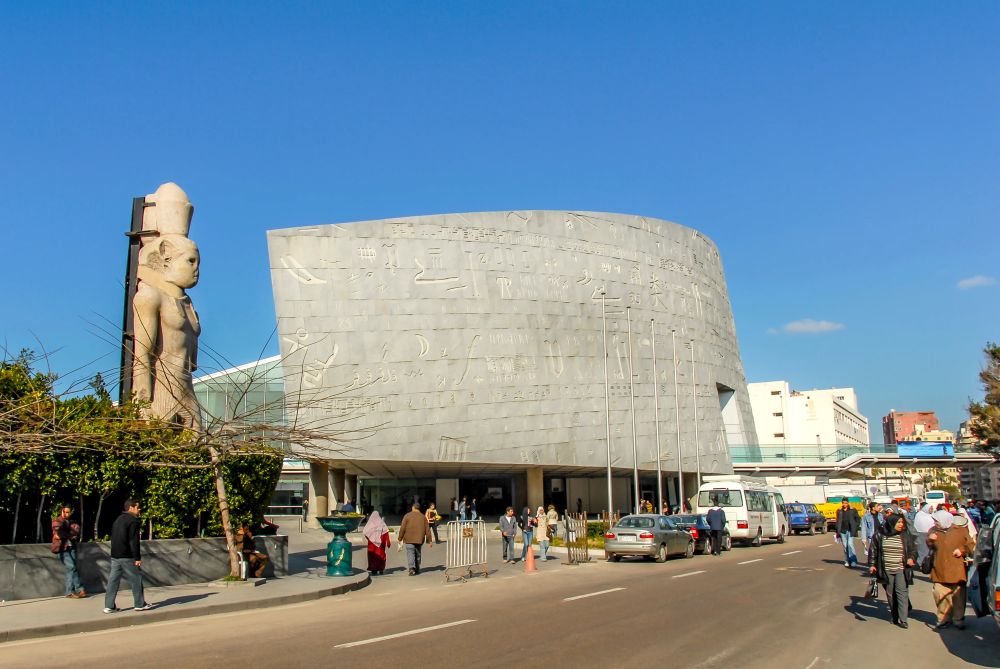
The city of Alexandria library stands as the ultimate symbol of human intellectual ambition. As the most famous repository of knowledge in the ancient world, it transformed the city of Alexandria library into the premier intellectual hub of the Mediterranean.
As shown in image_46b1c7.png, the history of the city of Alexandria library is best understood by addressing the fundamental questions that define its legacy: what it was, where it stood, and why its eventual decline remains a subject of intense historical debate.
What Was the City of Alexandria Library?
The city of Alexandria library was a monumental research institution established during the Ptolemaic Dynasty (c. 323–30 BCE). It was not merely a collection of books; it was part of a larger institution called the Mouseion (or "Museum"), a temple dedicated to the Nine Muses.
Designed as a "universal library," the city of Alexandria library had a core mission to acquire copies of every work ever written. It functioned as a model for the modern university, providing scholars with living quarters, dining halls, and lecture spaces, all funded by the Egyptian royal house.
Where Was the City of Alexandria Library Located?
The city of Alexandria library was situated within the Royal Quarter, also known as the Brucheion, in Alexandria, Egypt. While its exact architectural layout remains unknown, historical accounts describe a complex featuring colonnades for scholarly discussion, reading rooms, and gardens. A "daughter library" was also established later at the Serapeum to accommodate the overflow of the massive collection.
Why Was the Library Important in Ancient Times?
The significance of the city of Alexandria library transcended its role as a storage facility. Its importance stemmed from:
Intellectual Synthesis: It acted as a meeting point for Greek, Egyptian, and Near Eastern traditions, fostering a unique "melting pot" of cultural exchange.
Scientific Advancement: Scholars residing at the city of Alexandria library made groundbreaking discoveries, including the calculation of the Earth’s circumference.
Academic Patronage: The Ptolemies provided tax-free status, room, and board to the greatest minds, effectively creating the world’s first state-sponsored research fellowship.
What Kinds of Works Did It Collect?
The collection policy of the city of Alexandria library was famously aggressive. It aimed to house everything from "exalted epic poetry to humdrum cookbooks".
Diverse Media: The primary medium was the papyrus scroll.
Acquisition Methods: Anecdotes suggest that ships entering the port of Alexandria were searched, their books seized and copied, with the copies returned to the owners and the originals retained for the library.
Volume: Estimates regarding the library’s capacity vary widely, ranging from 40,000 to as many as 700,000 scrolls at its height.
Who Worked at the Library?
The Mouseion attracted scholars, scientists, poets, and linguists from across the known world. Notable figures included:
Demetrius of Phalerum: Often cited as the potential founder or the first to propose the library's organization.
Zenodotus of Ephesus: A curator who established the foundations of literary criticism and edited early versions of Homer’s epics.
Eratosthenes of Cyrene: The third head librarian and geographer who calculated the Earth’s circumference with remarkable precision.
Aristarchus of Samothrace: Renowned for his meticulous editions of classical texts.
Theories Regarding Its Destruction
The decline of the library was not a single event but a gradual process of neglect and conflict. Major theories include:
The Fire of 48 BCE: Julius Caesar is said to have accidentally set fire to the harbor, which may have spread to the library; however, historical records suggest the institution survived this event.
Loss of Patronage: As political power in the region shifted, the financial support from Ptolemaic rulers dwindled, leading to a decline in scholarly activity.
Religious and Civil Unrest: The 391 CE destruction of the Serapeum by Bishop Theophilus is widely considered a major blow to the "daughter library".
The Arab Conquest (642 CE): Stories claim that the library’s remaining contents were used as fuel for city bathhouses, though modern historians often debate the veracity of this account, noting it appeared in sources long after the event.
Departments of the Library of Alexandria
The academic and administrative structure of the city of Alexandria library was organized to facilitate the most ambitious intellectual pursuit in the ancient world. To ensure a professional and comprehensive understanding of this historic institution, the following department and organizational breakdown highlights how the facility functioned.
The Administrative and Functional Departments
The organization of the city of Alexandria library was defined by a unique fusion of royal oversight and scholarly autonomy. While modern records of its specific internal "departments" are largely reconstructed from historical commentary, the institution operated through several core functional pillars:
The Curatorial Division: This department was responsible for the acquisition, classification, and cataloging of scrolls. This role was overseen by the Head Librarian, who held a position of high prestige within the Ptolemaic court.
The Scholarly Fellowship (The Mouseion): Often considered the "Research Department," this division provided living quarters, dining facilities, and workspaces for the era's greatest minds. Scholars were relieved of manual labor to focus exclusively on research, translation, and commentary.
The Translation and Editing Bureau: A critical department within the city of Alexandria library that focused on reconciling differing versions of texts, particularly the works of Homer and other classical authors. This division laid the foundation for modern textual criticism.
The Scientific and Observational Wing: Because the city of Alexandria library was integrated with the Mouseion, it hosted specialized areas for mathematical, astronomical, and anatomical study, where figures like Eratosthenes conducted their research.
Frequently Asked Questions
- What was the primary purpose of the city of Alexandria library in ancient times?
- What was the role of the Mouseion within the city of Alexandria library complex?
The Mouseion acted as the research and administrative department of the institution. It provided the necessary infrastructure—including housing, dining, and lecture spaces—that allowed scholars to focus entirely on scientific, mathematical, and literary research without the distractions of daily life.
- How did the city of Alexandria library acquire its massive collection of scrolls?
Conclusion
intellectual departments that fostered advancements in science, humanities, and literary theory. By acting as both a repository and a state-sponsored research center, the city of Alexandria library created a blueprint for how civilization preserves and advances knowledge. The legacy of the city of Alexandria library continues to inform our modern understanding of how archives, research institutes, and universities should be structured to maximize human innovation.