
Travel Guide
Discovering Djara Cave | A Prehistoric Wonder in Egypt’s Western Desert
11 min read
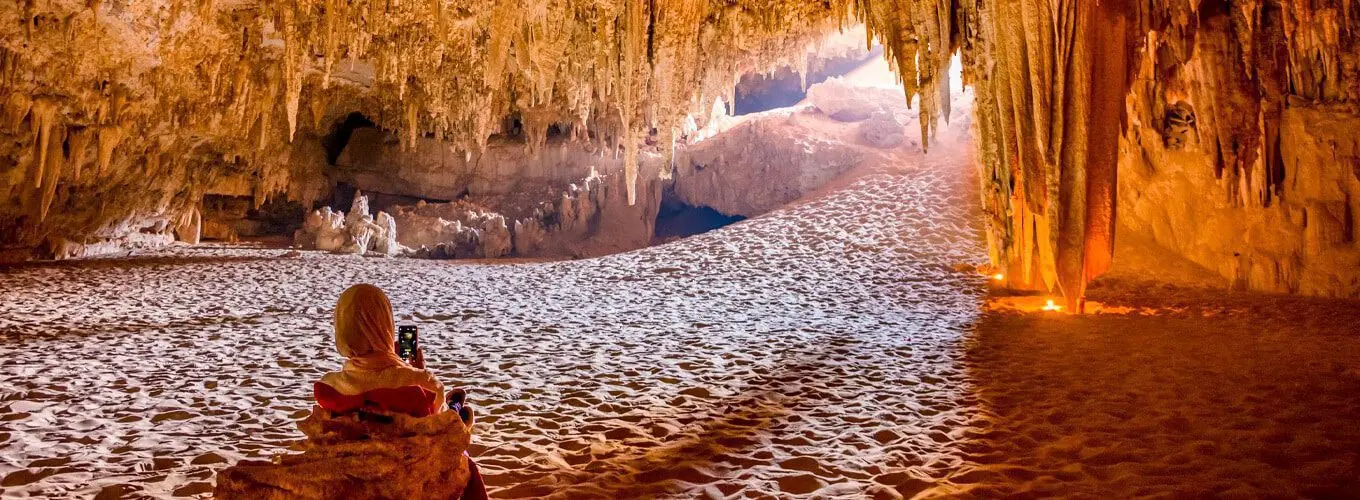
Deep within the vast, sun-scorched expanses of Egypt’s Western Desert lies a secret hidden beneath the sands—a place where time stands completely still. Djara Cave is a spectacular natural and archaeological marvel that remains entirely off the beaten path. For international travelers and adventure seekers looking to escape the crowded temples of the Nile Valley, Djara Cave offers a hauntingly beautiful, once-in-a-lifetime journey into the prehistoric past.
Famous for its awe-inspiring dripstone formations and enigmatic ancient petroglyphs, this underground cathedral of stone captivates everyone who descends into its depths. Extending deep beneath a striking limestone plateau, Djara provides a unique and tangible connection to a time long before the pharaohs, long before the pyramids, when the harsh Sahara Desert was a thriving, green ecosystem teeming with life.
The Discovery of a Desert Secret
While the local Bedouin tribes of the Western Desert likely knew of the cave's existence for generations, Djara Cave was officially brought to the attention of the modern scientific community in 1990 by German explorer Carlo Bergmann. Traveling by camel through some of the most unforgiving terrain on Earth, Bergmann stumbled upon this geological anomaly.
Following its rediscovery, the site received extensive archaeological and geological surveys conducted by international teams between 1999 and 2002.
These intensive studies revealed the true magnitude of the cave’s historical and scientific significance. Researchers mapped its intricate inner chambers, analyzed the chemical composition of its stones, and painstakingly documented the ancient artwork adorning its walls. Today, thanks to these efforts, the cave is recognized not just as a geological curiosity, but as a critical archive of human and environmental history in North Africa.
A Geological Masterpiece: The Frozen Waterfalls
What truly distinguishes Djara Cave from any other site in Northern Africa is its astonishing internal geology. The cave’s interior is a surreal landscape of majestic dripstone formations that resemble frozen waterfalls cascading from the ceiling.
As visitors descend through the narrow entrance, they are greeted by vast underground terraces and chambers that drop across three distinct levels.
For millions of years, ancient underground water flows and shifts in the desert climate slowly carved out these massive halls. Mineral-rich water dripping from the ceiling created the breathtaking stalagmites (rising from the floor) and stalactites (hanging from the roof).
Interestingly, recent geological studies have shown that many of these formations are composed of sandstone rather than the traditional limestone usually associated with such caves, adding another layer of scientific intrigue to the site. The natural sculptures create a mesmerizing, otherworldly atmosphere. The play of light from flashlights against the sparkling, jagged walls transforms the cave into a hauntingly beautiful underground palace, offering endless opportunities for breathtaking photography.
The Hall of the Gazelles: A Window into the Holocene
Beyond its natural beauty, Djara Cave is a treasure trove of prehistoric human history. The cave walls are inscribed with ancient rock art and petroglyphs that date back to the Holocene epoch a period stretching from roughly 10,000 to 6,000 years ago.
During this era, the climate of the region was drastically different. The arid Western Desert of today was a lush, vibrant savanna with abundant rainfall, lakes, and diverse wildlife. Early hunter-gatherer communities roamed these lands, and they used Djara Cave as a shelter and a sacred space.
The most famous section of the cave is colloquially known as the "Hall of the Gazelles." Here, the ancient inhabitants carved vivid, dynamic scenes into the rock. These petroglyphs depict daily prehistoric life, including detailed hunting expeditions, gathering scenes, and various animals such as ostriches, antelopes, and gazelles. Standing in the silent, cool chambers of the cave and viewing these millennia-old engravings provides a profound, emotional connection to the earliest chapters of human civilization in Egypt.
The Ultimate Safari Itinerary: The Journey to Djara
Visiting Djara Cave is not just a destination; it is an epic adventure. Because of its remote location, the cave cannot be visited on a simple day trip from Cairo. It requires a fully equipped 4x4 desert safari, typically spanning two to three days, weaving through some of the most spectacular landscapes on the planet.
Here is what an unforgettable safari expedition to Djara Cave typically entails:
Day 1: Into the Oasis and the Black Desert
Your journey begins with a drive from Cairo to the lush Bahariya Oasis, the gateway to the Western Desert. After enjoying a traditional local lunch, you transfer to robust 4x4 vehicles and venture off-road. The first major stop is the Black Desert, a striking landscape covered in volcanic dolerite rocks that make the dunes look as though they have been dusted with dark charcoal.
Continuing the journey, you will visit Crystal Mountain, a sparkling ridge made entirely of quartz crystals that glisten brilliantly under the desert sun. As evening approaches, your guides will set up a comfortable desert camp. You will enjoy a traditional Bedouin dinner cooked over an open fire, falling asleep under a vast, unpolluted sky filled with millions of stars.
Day 2: The Magic of Djara and the White Desert
After a hearty breakfast, the expedition heads deep into the remote limestone plateaus towards Djara Cave. The drive itself is an exhilarating off-road experience. Upon arrival, you will descend into the cool, silent chambers of the cave, spending hours exploring the frozen waterfalls and marveling at the ancient rock art.
In the afternoon, the journey continues to the world-renowned White Desert National Park. This alien landscape is famous for its massive, chalk-white rock formations carved by centuries of wind and sand into surreal shapes resembling giant mushrooms, ice cream cones, and animals. Camping in the White Desert, surrounded by these glowing white monuments under the moonlight, is an ethereal experience that perfectly complements the mystery of Djara Cave.
Day 3: Natural Springs and the Return
On the final day, before heading back to civilization, visitors often stop at natural thermal springs, such as Ain El Serw, which miraculously flow with fresh water in the middle of the arid sands. After a refreshing dip, the convoy heads back to the Bahariya Oasis, and finally, returns to Cairo, leaving you with memories of a landscape that feels worlds away from the modern era.
Practical Guide for International Travelers
To ensure a safe, comfortable, and awe-inspiring experience, proper preparation is essential.
When to Visit: The desert climate is extreme. The best time to embark on this safari is between October and April. During these winter and spring months, daytime temperatures are pleasantly cool (ideal for trekking and exploring), while nights are cold, requiring warm layers for camping.
Permits and Security: The Western Desert is a protected and heavily monitored area. Independent travel is strictly prohibited. You must travel with a licensed tour operator who will secure all necessary military and environmental permits on your behalf.
What to Pack: Pack lightweight, breathable clothing for the day, and heavy thermal layers (jackets, beanies, scarves) for the night. Bring sturdy hiking boots, a high-quality headlamp or flashlight for the cave, ample sunscreen, and a camera with extra batteries (as there is no electricity in the desert).
Plan Your Ultimate Adventure with Desert Cruise Travel
Exploring the depths of the Western Desert requires unparalleled expertise, deep local knowledge, and an uncompromising commitment to safety. At Desert Cruise Travel, we specialize in crafting exclusive, high-quality safaris to Djara Cave and the surrounding natural wonders.
Why Choose Us?
Expert Bedouin Guides: Navigate the sands with locals who know the desert like the back of their hand.
Premium 4x4 Vehicles: Travel in absolute comfort and safety with our fully equipped, modern off-road fleet.
Hassle-Free Logistics: From Cairo hotel pickups to securing all mandatory government permits, we handle every detail.
Luxury Desert Camping: Enjoy high-quality tents, warm sleeping bags, and spectacular open-fire dining under the stars.
Don't just read about history—step inside it. Contact Desert Cruise Travel today to book your unforgettable Djara Cave and White Desert Safari.
Frequently Asked Questions
Where exactly is Djara Cave located?
Djara Cave is situated in a remote limestone plateau in Egypt’s Western Desert, approximately 350 kilometers west of Cairo and easily accessible via the Bahariya Oasis route.
Is it safe to visit the Western Desert and Djara Cave?
Yes, it is very safe, provided you travel with a licensed, professional tour operator. The Egyptian authorities strictly monitor desert travel, and professional guides know the safest routes and have direct communication with local checkpoints.
What makes the formations inside Djara Cave so unique?
Unlike many global caves that are purely limestone, the stalagmites and stalactites in Djara Cave have a high sandstone composition. They resemble spectacular "frozen waterfalls" and have been preserved perfectly due to the dry desert climate above ground.
Conclusion
Djara Cave is a testament to the enduring power of nature and the deep roots of human history. It offers a travel experience that completely defies the conventional expectations of an Egyptian holiday. By blending the adrenaline of a 4x4 desert safari with the quiet, profound awe of discovering prehistoric art in an underground palace, a journey to Djara is truly transformative. It reminds us that long before the grand temples of Luxor or the Great Pyramids of Giza were even conceived, ancient humans were leaving their mark on this magnificent, ever-changing land.