
Travel Guide
inside Philae Temple Aswan: The Enchanting Island Sanctuary of Isis
10 min read
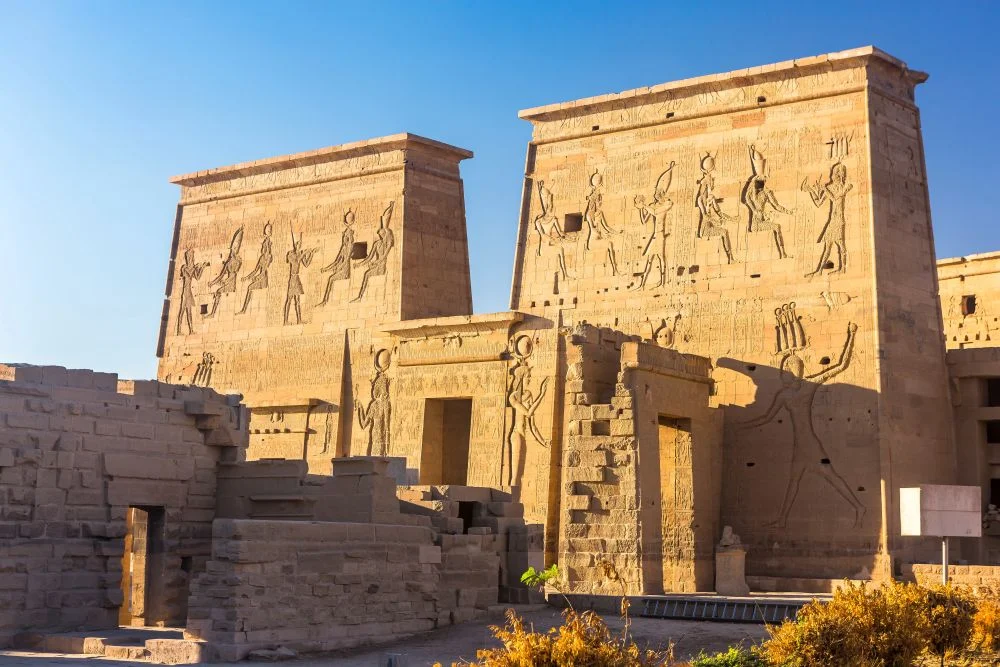
Philae Temple is an iconic ancient Egyptian temple complex beautifully situated on Agilkia Island in Aswan, Upper Egypt. Originally constructed during the 4th century BCE on the sacred island of Philae, this breathtaking monument was built as the primary cult center for Isis, the ancient Egyptian goddess of magic, healing, fertility, and motherhood.
What makes this floating monument truly extraordinary is that it survived one of the most complex and ambitious engineering salvage operations in modern history. Following the construction of the Aswan Low and High Dams, the rising waters of the Nile River left the temple partially submerged for decades. To save this priceless heritage, a massive international UNESCO rescue campaign took place between 1972 and 1980. Engineers meticulously dismantled the entire temple complex stone-by-stone into more than 40,000 individual blocks, weighing a combined total of over 27,000 tons, and perfectly reconstructed it on higher ground on the nearby Agilkia Island, preserving its original layout with absolute precision.
Today, the island sanctuary stands as a magnificent testament to ancient spiritual devotion and modern technological resilience. It represents one of the final bastions where traditional Pharaonic religious practices flourished, smoothly blending with Greco-Roman artistic and architectural styles. Accessible exclusively by a scenic motorboat ride across the Nile, the highly detailed reliefs and sacred chambers found inside Philae Temple draw hundreds of thousands of global travelers who come to marvel at its soaring pylons and legendary myths.
In this definitive travel guide, we will dive deep into the fascinating history of the site, the dramatic myth of Isis and Osiris, the architectural masterpieces awaiting you inside Philae Temple, and the essential practical logistics you need to know—including how to navigate the local boat docks—for a flawless visit to this Aswan jewel.
History of Philae Temple: The Last Bastion of Ancient Egypt
The historical timeline of Philae Temple is a fascinating journey that spans over a thousand years, bridging the gap between native Egyptian pharaohs and foreign conquerors. While early shrines existed on the original island during the New Kingdom, the oldest surviving structure within the complex belongs to King Nectanebo I of the 30th Dynasty (circa 380–362 BCE), the last native Egyptian dynasty to rule.
Following the conquest of Alexander the Great, the Ptolemaic dynasty undertook a massive expansion of the site. It was under Ptolemy II Philadelphus and his successors that the grand, primary temple dedicated to Isis was constructed and elaborately decorated. When the Roman Empire annexed Egypt, Roman emperors including Augustus, Tiberius, and Hadrian recognized the profound influence of the Isis cult and continued to add magnificent architectural monuments to the island, blending Greco-Roman elegance with traditional Egyptian layouts.
What truly elevates the historical significance of the site is its incredible cultural resilience. Long after Christianity became the official religion of the Roman Empire and other pagan temples were forcibly closed, Philae remained an active spiritual center for traditional ancient Egyptian and Nubian worshippers.
It was inside Philae Temple that the very last known hieroglyphic inscription in human history was carved onto a wall near the Gate of Hadrian. Known to historians as the Graffito of Esmet-Akhom, it is precisely dated to August 24, 394 CE. This inscription represents the literal "final breath" of ancient Egyptian hieroglyphic writing before the language faded into obscurity. The sacred complex finally closed its doors as a pagan sanctuary in 537 CE, by a strict imperial decree from the Byzantine Emperor Justinian I, after which sections of the hypostyle hall were converted into a Christian church dedicated to Saint Stephen.
Architectural Highlights and Layout Inside Philae Temple
The architectural design found inside Philae Temple is a spectacular showcase of late Pharaonic grandeur blended seamlessly with Greco-Roman symmetrical elegance. As you explore the island complex, you will notice that unlike earlier New Kingdom temples, which feature rigid, straight linear axes, Philae’s layout curves gently along the natural shoreline of the island, creating a visually dynamic experience at every turn.
- The First Pylon and the Grand Forecourt
Your journey inside philae temple begins at the magnificent First Pylon, a colossal stone gateway standing 18 meters high and 45 meters wide. Commissioned primarily by Ptolemy II Philadelphus, the front facade features towering, dramatic reliefs of King Ptolemy XII Auletes smiting his enemies in the presence of Isis, Horus, and Hathor—a classic display of royal military might and divine backing.
Passing through this massive portal brings you into the Grand Forecourt. This open-air courtyard is flanked on both sides by elegant, shaded colonnades. The western colonnade is particularly famous for its 31 monumental pillars, each topped with completely unique, intricately carved floral and palm-leaf capitals, ensuring that no two columns look exactly alike.
- The Mammisi (The Birth House of Horus)
Located on the western side of the forecourt sits the Mammisi, or the Birth House. This specialized building was an essential feature of Ptolemaic religious architecture, built specifically to celebrate the divine birth of the falcon god, Horus.
Stepping inside philae temple's birth house reveals beautifully preserved, vivid wall reliefs. These carvings depict the mystical story of Horus’s immaculate conception, his birth in the marshes of the Nile Delta, and scenes of Isis tenderly nursing her infant son. Roman emperors like Augustus later added their own reliefs here, participating in these sacred rituals to legitimize their rule over the Egyptian population as divine pharaohs.
- The Hypostyle Hall and Inner Sanctuary
Moving past the Second Pylon grants you access to the intimate Hypostyle Hall. This roofed stone hall features ten soaring columns that create a dramatic play of light and shadow. Look closely at the walls and pillars here; you will find a fascinating historical overlay. Alongside ancient Pharaonic reliefs, there are numerous Christian crosses deeply chiseled into the stone, alongside Coptic inscriptions a direct physical reminder of the era when early Christian hermits converted this pagan hall into a church.
At the very back of the complex lies the dark, silent Sanctuary (Holy of Holies). This was the most sacred room on the entire island, where only the High Priest and the Pharaoh were permitted to enter. Although the gold, jewel-encrusted cult statue of Isis was looted centuries ago, the monolithic granite pedestal (naos) presented by Ptolemy III and his wife Berenice still stands firmly in the center of the dark chamber.
- The Kiosk of Trajan (The Pharaoh's Bed)
Positioned gracefully on the eastern riverbank of the island, completely separate from the main temple structure, stands the iconic Kiosk of Trajan. Often affectionately nicknamed "The Pharaoh's Bed" by locals and early 19th-century travelers, this open-air pavilion is arguably the most famous and photographed landmark on the entire island.
Though never fully completed, the kiosk was constructed by the Roman Emperor Trajan around 115 CE. It features fourteen massive, elegant columns connected by beautifully carved screen walls. The interior reliefs show Trajan offering fine wine to Isis and Osiris. Its location on the edge of the water served a practical ritual purpose: it functioned as a grand covered shelter where the sacred river barque carrying the statue of Isis could rest during major religious festivals, allowing worshippers arriving by boat to catch a glimpse of their goddess.
Practical Visitor Logistics for Philae Temple
Planning an independent visit to Philae Temple requires a bit of strategic preparation because of its unique island location. Below is a quick-reference breakdown of the essential details you need before heading out:
| Detail | Information | Notes |
| Opening Hours | 7:00 AM – 4:00 PM Daily | Last entry ticket is usually sold at 3:30 PM. |
| Adult Ticket Fee | EGP 550 (Foreigners) / EGP 40 (Egyptians) | Subject to change; check official ministry updates. |
| Student Ticket Fee | EGP 275 (Foreigners) / EGP 20 (Egyptians) | Requires a valid physical International Student Identity Card (ISIC). |
| Payment Method | Strictly Card Only at the ticket office | Visa or Mastercard mandatory; cash is not accepted for entrance tickets. |
Navigating the Boat Marina: Crucial Tips to Avoid Scams
The official ticket office is located onshore at the Philae Port (Marina). However, your entrance ticket does not include the boat ride to Agilkia Island. Navigating the boatmen at the marina is often the most stressful part of the journey for independent travelers.
To ensure a smooth transit, keep these golden rules in mind:
The Official Rate vs. Reality: There is a government-mandated price sign at the dock (usually around EGP 250–300 per boat for a round trip), but captains will almost always demand more, frequently asking for EGP 400 to EGP 600.
Negotiate Before You Board: Always agree on a definitive total round-trip price for the entire boat not per person before stepping foot on the deck.
The Waiting Time Agreement: Clarify that the price includes the captain waiting for you on the island for 1.5 to 2 hours while you explore, and bringing you back.
Payment Discipline: Never pay upfront. Only pay the captain the agreed amount once you are safely back on the mainland shore at the end of your tour.
The Nightly Sound and Light Show at Philae
If you want to experience the island under a completely different, ethereal atmosphere, the Philae Sound and Light Show is highly recommended. As darkness falls, the entire complex is illuminated by dramatic multi-colored floodlights, and laser projections dance across the stone pylons.
Accompanied by a cinematic musical score and dramatic voiceovers, the show narrates the tragic myth of Isis and Osiris, the building of the temple, and the miraculous UNESCO salvage operation. It feels like stepping straight into a time machine.
Pro Tip: The show requires a separate ticket from the daytime general admission. Showtimes vary by language (English, Spanish, French, German, and Arabic) depending on the day of the week, so always verify the current schedule online before booking your evening taxi.
Frequently Asked Questions
- How long do you need inside Philae Temple?
An ideal visit takes between 1.5 to 2 hours. This allows you enough time for a 15-minute boat ride each way, a thorough walk-through of the main chambers, snapping photos at the Kiosk of Trajan, and examining the Coptic crosses chiseled inside the hypostyle hall.
- Can you visit Philae Temple without a tour guide?
Yes, absolutely. The site is highly accessible for solo and independent travelers. However, because there are very few informational plaques inside Philae Temple, hiring a licensed Egyptologist guide at the entrance or bringing a detailed digital guide is highly recommended to appreciate the deep mythological context.
- What is the best time of day to visit?
The absolute best time to visit is early morning (7:30 AM to 9:00 AM) to beat both the intense Upper Egyptian heat and the large cruise ship tour groups. Alternatively, visiting around 2:30 PM offers gorgeous, warm golden-hour lighting that is perfect for photography, right before the complex closes.
Conclusion
Philae Temple remains one of the most breathtaking jewels in Egypt’s archaeological crown. Its unique blend of dramatic rescue history, serene island geography, and deeply romantic mythology creates an unforgettable atmosphere that stays with you long after the boat docks back on shore. Whether you are marvelling at the towering first pylon or seeking out the historic final hieroglyphic script inside the Gate of Hadrian, a journey to this island sanctuary is an essential highlight of any Aswan itinerary.