
Travel Guide
Discover the Majestic Kalabsha Temple | Aswan’s Nubian Marvel
17 min read
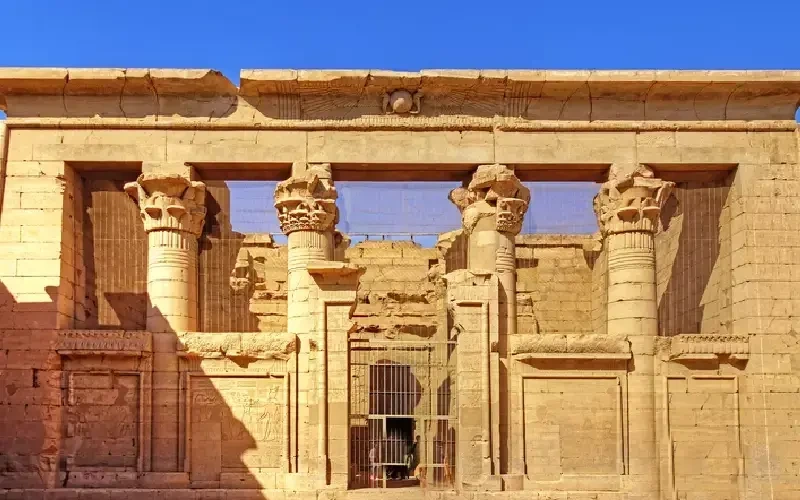
Kalabsha Temple is one of Aswan’s most tranquil, magnificent, and historically layered ancient monuments. Gracefully positioned on an island overlooking the vast, serene waters of Lake Nasser, it stands as a testament to both ancient architectural brilliance and modern engineering. Constructed around 30 BCE during the dawn of the Roman era under Emperor Augustus, this architectural masterpiece was originally dedicated to Mandulis, the revered Nubian sun god.
Offering a unique artistic fusion of traditional Egyptian motifs and Roman stylistic influences, Kalabsha stands today as one of the grandest and best-preserved freestanding temples of lower Nubia. It is not merely a place of ancient worship but a monumental record of the region's complex cultural evolution. From its late Ptolemaic roots to its miraculous 20th-century rescue from the flooding caused by the Aswan High Dam, the temple offers international visitors a peaceful, crowd-free journey into the spiritual heart of southern Egypt. If you are seeking a profound connection with antiquity away from the bustling tourist trails, Kalabsha Temple is an indispensable addition to your Egyptian itinerary.
The Origins and Complex History of Kalabsha
The story of Kalabsha Temple is a fascinating tapestry of overlapping empires, shifting religious paradigms, and cultural synthesis. While the grand structure we explore today dates back to the Roman period, the sacred ground it rests upon has a much older lineage.
- From Pharaohs to Emperors
The current temple was built over an earlier sanctuary that dates back to the New Kingdom's 18th Dynasty, specifically linked to the reigns of Pharaohs like Amenhotep II. The site was continuously venerated and later expanded during the late Ptolemaic period. However, it was the Roman Emperor Augustus who commissioned the massive sandstone complex we see today. Following his conquest of Egypt, Augustus sought to solidify his authority in the southern frontier of Nubia. By building a grand temple dedicated to local gods, he aimed to win the loyalty of the Nubian population while projecting the unstoppable might of Rome.
Interestingly, despite the massive scale and ambitious design, the temple was never entirely completed. Many of its walls feature rough, uncarved stone blocks where intricate reliefs were planned but never executed. This unfinished state provides modern archaeologists and visitors with a rare, behind-the-scenes look at the ancient methods of temple construction, revealing the raw chisel marks of laborers who lived over two millennia ago.
- The Divine Trio: Mandulis, Isis, and Osiris
The primary purpose of Kalabsha Temple was to serve as the cult center for Mandulis (known in Egyptian as Merwel), a deeply venerated Nubian sun deity associated with youth, protection, and fertility. Mandulis was frequently depicted wearing an elaborate headdress featuring ram horns, cobras, and tall plumes, symbolizing his divine dominion.
To bridge the cultural gap between the native Nubians and the Egyptian priesthood, the temple also included prominent shrines dedicated to the Egyptian gods Isis (the goddess of magic and motherhood) and Osiris (the god of the afterlife). The harmonious presence of these deities within a single complex illustrates the cosmopolitan, integrative nature of religious practices in southern Egypt during the Greco-Roman era. It was a place where distinct cultures did not clash but merged into a unified spiritual vision.
A Masterpiece of Greco-Roman Architecture
Kalabsha Temple is widely celebrated as one of the finest examples of classical Ptolemaic and Roman temple architecture in the Nubian region. Its layout follows the traditional Egyptian blueprint, yet it incorporates subtle Roman spatial enhancements. The complex measures approximately 76 meters in length and 22 meters in width, making it a dominating presence against the desert landscape.
The Monumental Gateway (Pylon): The visitor’s journey begins at the towering main pylon, an imposing stone gateway that stands perfectly offset against the blue waters of Lake Nasser. Passing through this threshold, you enter an open-air forecourt bordered by columns. This impressive entrance sets the tone for the grandeur hidden within the inner sanctuaries.
The Colonnaded Hypostyle Hall: Beyond the forecourt lies the magnificent Hypostyle Hall, a vast space supported by eight slender, intricately carved columns adorned with elaborate floral capitals. The walls here are a visual feast of religious iconography.
Detailed reliefs depict Emperor Augustus, dressed in traditional pharaonic regalia, making offerings to Mandulis, Isis, and other members of the Egyptian pantheon. These carvings were powerful pieces of political propaganda, designed to portray the foreign Roman emperor as a legitimate, divine ruler recognized by the gods of the Nile.
The Offering Chambers and Sanctuary: Moving deeper into the temple, the spaces become progressively smaller and darker, emphasizing the transition from the mortal world to the divine realm. Visitors pass through two transversal offering halls before reaching the Holy of Holies—the Sanctuary of Mandulis. This intimate, central chamber once housed the sacred cult image of the god, accessible only to high-ranking priests who conducted daily purification and feeding rituals.
The Panoramic Roof: One of the most unique and thrilling aspects of visiting Kalabsha Temple today is the accessibility of its roof. A narrow, ancient stone staircase allows visitors to climb from the sanctuary up to the upper terraces. From this vantage point, you are rewarded with sweeping, panoramic views of the temple complex below, the shimmering expanse of Lake Nasser, and the rugged, sun-baked desert horizons. It is a spectacular spot for landscape photography and quiet reflection.
The Great Relocation: A Modern Miracle
While the ancient history of Kalabsha is captivating, its modern survival story is equally miraculous. During the 1960s, the Egyptian government initiated the construction of the massive Aswan High Dam. While this project was crucial for Egypt's modern agricultural and electrical development, it created a massive artificial reservoir—Lake Nasser—that threatened to submerge thousands of years of Nubian heritage forever.
In response to this impending cultural catastrophe, UNESCO launched a monumental international rescue campaign. Kalabsha Temple, being the largest freestanding temple in Egyptian Nubia, was a top priority. Financed heavily by the Federal Republic of Germany, a team of expert engineers, archaeologists, and laborers took on the Herculean task of saving the monument.
The entire temple was meticulously mapped, documented, and then cut into more than 13,000 massive stone blocks, some weighing several tons. These blocks were carefully transported and reassembled on New Kalabsha Island, located just south of the High Dam and roughly 50 kilometers from its original site. The reconstruction took place over two years, from 1962 to 1963, perfectly preserving the temple's structural integrity and intricate reliefs. Today, the relocated temple stands not only as an ancient sanctuary but as a testament to human ingenuity and international cooperation.
Inscriptions and Cultural Crossroads
Kalabsha Temple served not just as a religious hub, but as an enduring public record for the diverse communities that inhabited the region over centuries. The walls of the temple are a veritable library of ancient texts, offering scholars invaluable insights into the daily life, politics, and shifting spiritual paradigms of the era.
The Prohibition of Pigs: One of the most curious and frequently discussed inscriptions found in the temple is a decree strictly prohibiting pigs from entering the sacred precincts. This provides a fascinating glimpse into the dietary and purity laws enforced by the local priesthood during the Roman occupation.
The Victory Stela of King Silko: In the outer courtyard, visitors can find an incredibly significant inscription detailing the military triumphs of Silko, a Christian King of the Nubian kingdom of Nobatia in the 6th century CE. Written in Greek, the inscription celebrates his victory over the Blemmyes, a nomadic desert tribe. This text highlights the temple's evolving role from a pagan sanctuary to a symbol of regional political power.
Christian Adaptations: As the Roman Empire transitioned to Christianity, so too did Kalabsha Temple. By the 5th and 6th centuries CE, the ancient pagan site was adapted into a Christian church. Visitors today can still spot faint traces of this era, including Christian crosses deeply carved into the ancient sandstone pillars, quietly telling the story of a civilization in profound transition.
Practical Guide for International Travelers
To ensure you have the best possible experience when exploring Kalabsha Temple, careful planning is highly recommended. The temple's island location provides a sense of exclusivity, but it requires a bit of logistical preparation.
1. How to Get There: Kalabsha Temple is located just south of the Aswan High Dam. The most common way to reach the site is by hiring a taxi from central Aswan to the docks near the High Dam, a journey of about 30 minutes. From the dock, you must negotiate a short, scenic motorboat ride to New Kalabsha Island. The boat ride itself is a highlight, offering beautiful views of the lake and the approaching temple façade.
2. Optimal Weather and Timing: For travelers arriving from colder climates in Europe or North Asia, the optimal time to visit is during the Egyptian winter, from late October to April. During these months, daytime temperatures range comfortably between 20°C and 26°C (68°F to 79°F). If you must visit during the intense summer months, aim for an early morning trip to avoid the peak midday heat.
3. Combine Your Visit: Because it is situated on an island, a trip to Kalabsha can easily take up half a day. To maximize your time in Aswan, consider combining this visit with a tour of the nearby Nubian Museum to deepen your understanding of the artifacts and culture you just witnessed, or couple it with a visit to the monumental Aswan High Dam.
4. What to Bring: Since the island offers little in the way of commercial facilities, be sure to bring plenty of bottled water, high-SPF sunscreen, a wide-brimmed hat, and comfortable, sturdy walking shoes for navigating the uneven stone floors and the steep staircase leading to the roof.
Plan Your Unforgettable Journey Don't miss out on this spectacular piece of Nubian history. Click below to secure a fully guided, seamless experience with expert local Egyptologists.
Frequently Asked Questions
- When was Kalabsha Temple originally built, and who commissioned it?
The temple's earliest foundations date back to the 18th Dynasty of the Egyptian New Kingdom and the Ptolemaic era. However, the monumental sandstone structure visible today was primarily constructed around 30 BCE under the orders of the Roman Emperor Augustus.
- Why is Kalabsha Temple located on an island today?
Originally, the temple stood on the west bank of the Nile. It was meticulously dismantled into thousands of blocks and relocated to New Kalabsha Island in the 1960s by a UNESCO-led initiative. This was done to save the monument from being completely submerged by the rising waters of Lake Nasser following the construction of the Aswan High Dam.
- Which ancient deities were worshipped at this site?
The main sanctuary was dedicated to Mandulis, the Nubian sun god. However, recognizing the cultural blend of the region, the temple also heavily featured worship spaces and reliefs dedicated to the Egyptian deities Isis and Osiris.
Conclusion
Kalabsha Temple stands as a tranquil, enduring monument that embodies the spiritual devotion and architectural brilliance of ancient Nubia and Rome. Saved from the depths of Lake Nasser by an unprecedented feat of modern engineering, it now invites travelers from around the globe to explore its peaceful courtyards, deeply carved halls, and sweeping rooftop views. A visit to Kalabsha is more than a simple sightseeing excursion; it is a profound opportunity to connect with a layered, multicultural history that spans ancient Egyptian pharaohs, Nubian kings, Roman emperors, and early Christian congregations.