
Travel Guide
Inside King Tutankhamun Treasure | Secrets of Egypt’s Golden Pharaoh
14 min read
Key Takeaways (Quick Facts for Your Visit):
Total Artifacts: Over 5,398 meticulously preserved items reunited for the first time in history.
New Location: The Grand Egyptian Museum (GEM) in Giza, Egypt, overlooking the Great Pyramids.
Exhibition Space: A massive, dedicated gallery spanning roughly 7,000 square meters.
Must-See Highlights: The 11-kilogram solid Golden Mask, the intricate Royal Throne, and the awe-inspiring nested coffins.
Best Time to Visit: October to April offers the most comfortable climate for international travelers.
The discovery of the King Tutankhamun treasure by British archaeologist Howard Carter in 1922 remains arguably the most defining and captivating moment in global archaeological history. Unearthed almost perfectly intact in the desolate sands of the Valley of the Kings, the tomb revealed thousands of artifacts that provided the world with an unprecedented, intimate insight into ancient Egyptian royal wealth, profound spiritual beliefs, and intricate daily life.
Today, this remarkable collection of pharaonic relics continues to draw millions of international visitors—from Europe to South America, and across Asia—who are eager to witness the ultimate symbol of ancient civilization. No longer scattered across different exhibitions or crowded in outdated halls, the boy king's complete legacy has finally found a permanent, state-of-the-art home.
The Discovery That Shook the World
To truly appreciate the magnitude of Tutankhamun's collection, one must look back to November 1922. After years of fruitless searching and dwindling funding from Lord Carnarvon, Howard Carter's team finally uncovered a hidden step in the bedrock of the Valley of the Kings. When Carter made a tiny breach in the doorway and peered into the darkness by the light of a single candle, he was asked if he could see anything. His famous reply, "Yes, wonderful things," echoed around the globe.
Unlike most royal tombs which had been mercilessly looted by grave robbers in antiquity, tomb KV62 was miraculously hidden beneath debris from later construction. Inside, Carter found a staggering array of wealth: golden shrines, chariots, statues, weapons, and everyday items meant to sustain the pharaoh in the afterlife.
This discovery sparked a global phenomenon known as "Tutmania" in the 1920s.
It influenced art deco architecture in Europe, inspired fashion trends in the Americas, and captured the imagination of the entire world. Decades later, partial global tours of the artifacts—such as the massive exhibitions in London, Tokyo, and the United States during the 1970s—only fueled this international fascination. Yet, those traveling exhibitions only showcased a fraction of the actual collection. Today, the world must come to Egypt to witness the true scale of this historical marvel.
The Grand Egyptian Museum: A Modern Marvel for an Ancient King
For the first time in over a century since its discovery, the entire King Tutankhamun treasure is united under one magnificent roof at the Grand Egyptian Museum (GEM). This architectural masterpiece, located just two kilometers from the Giza Pyramids, marks a new era of cultural preservation and modern exhibition.
Spanning an incredible 7,000 square meters, the two dedicated Tutankhamun galleries are designed to immerse global travelers in the enigmatic world of the 18th-dynasty pharaoh.
The GEM houses exactly 5,398 breathtaking objects from the tomb. By utilizing advanced, multilingual narrative techniques, climate-controlled display cases, and cutting-edge lighting, the museum ensures these delicate antiquities are protected for future generations.
The layout of the exhibition is a triumph of museum design. It guides visitors through a chronological and spatial journey that mirrors the exact layout of the original tomb: from the Antechamber and the Annex to the Burial Chamber and the Treasury. Atmospheric lighting focuses solely on the glimmering gold and vibrant lapis lazuli, evoking the authentic, mysterious atmosphere of the burial chamber exactly as Carter experienced it.
Inside the Collection: Highlights of the Boy King's Legacy
While every piece among the 5,398 artifacts tells a story, certain masterpieces stand out for their unparalleled artistry, historical significance, and sheer magnificence.
- The Iconic Golden Mask: A Masterpiece of Ancient Art
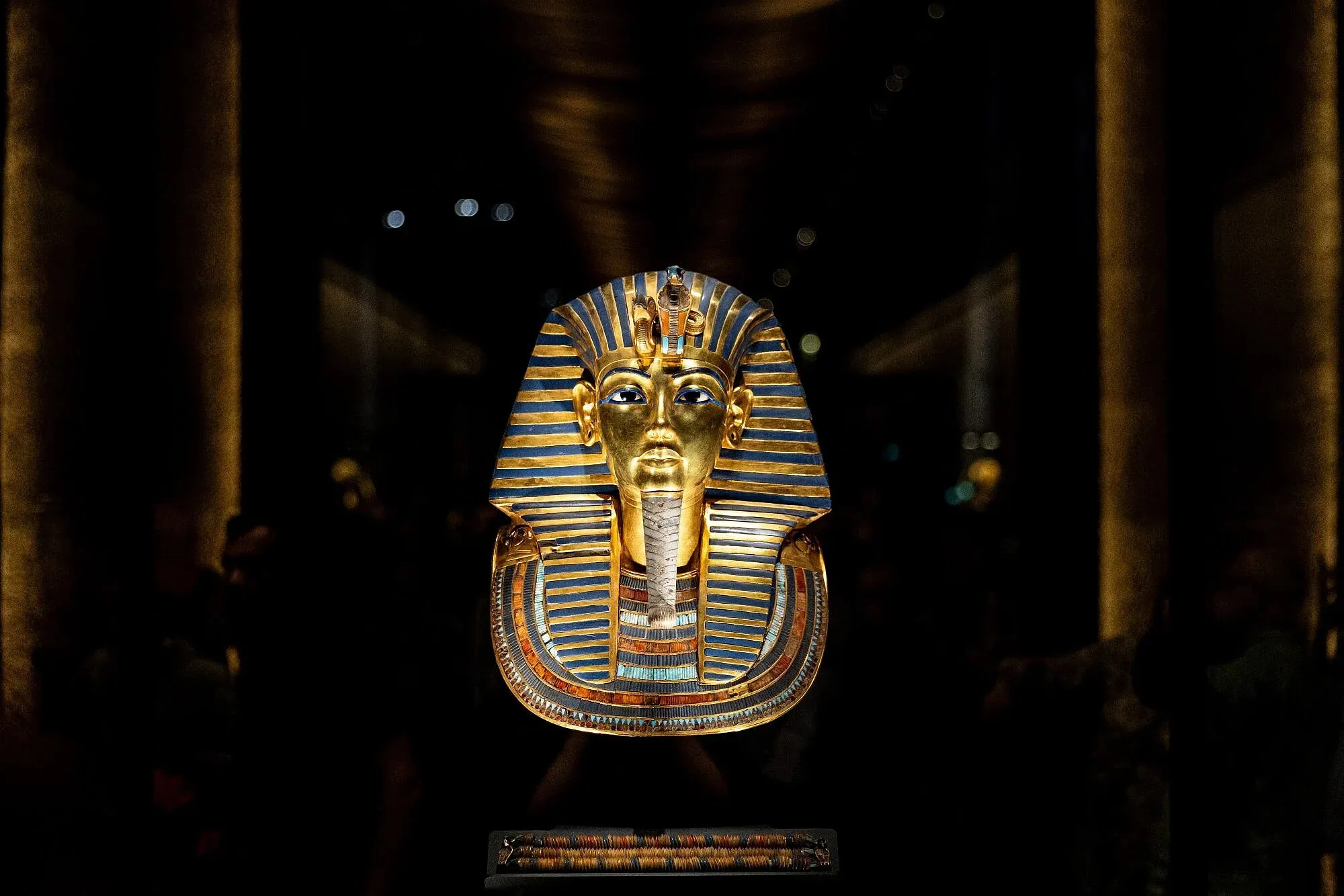
Without a doubt, the most recognizable artifact in human history is Tutankhamun's death mask. Resting originally over the mummy's head and shoulders, this phenomenal piece is crafted from 11 kilograms of solid, high-karat gold. It is beautifully inlaid with colored glass, faience, and semi-precious stones including deep blue lapis lazuli (representing the hair of the gods), quartz, and obsidian. The mask symbolizes power, immortality, and the spiritual ideals of Egyptian society. Its exquisite symmetry and the hauntingly calm expression of the young king have made it the ultimate emblem of Egypt's golden age.
- The Golden Shrines and Nested Coffins
The pharaoh’s journey to eternity was safeguarded by an incredibly complex series of containers. The King Tutankhamun treasure includes four gilded wooden shrines nested within each other, which originally housed a carved quartzite sarcophagus. Inside the sarcophagus lay three distinct, nested coffins. The innermost coffin is perhaps the most astounding, it is made entirely of thick, solid gold and weighs over 110 kilograms. Covered in protective spells and iconography of the gods Osiris, Isis, and Nephthys, these funerary objects reflect the deep-rooted Egyptian obsession with life, death, and rebirth.
- The Royal Throne: A Glimpse into Palace Life
Beyond the artifacts of death, the collection offers a rare window into the living, breathing royal court. The golden throne is adorned with intricate, intimate scenes crafted in the distinctive "Amarna" art style. The backrest showcases a touching depiction of the young king being anointed with perfume by his wife, Queen Ankhesenamun, under the life-giving rays of the sun god, Aten. Covered in gold leaf, silver, and precious stones, the throne's design humanizes the legendary figure, revealing his personal tastes and the affectionate relationships within the palace.
- Chariots, Weapons, and the Life of a Young Ruler
Tutankhamun ascended the throne at the age of nine and died at nineteen. Despite his youth and known physical frailties, he was still the commander-in-chief of Egypt. The collection features six meticulously disassembled chariots some designed for state ceremonies and others for hunting. Alongside these are beautifully crafted bows, arrows, daggers (including the famous dagger made from meteoric iron), and shields. Furthermore, the inclusion of everyday items like board games (such as Senet), linen garments, and even the king's personalized sandals, paints a vivid picture of a boy navigating the immense pressures of a divine royal world.
- Exceptional Jewelry and Amulets
The jewelry from the tomb serves as a testament to the supreme artisanship of ancient Egyptian goldsmiths. Hundreds of pieces, including heavy pectoral necklaces, intricate earrings, scarab rings, and protective amulets, were found wrapped within the layers of the king's mummy. These pieces feature advanced metalworking techniques such as gold granulation and delicate cloisonné. Each gemstone was chosen not just for its beauty, but for its magical properties meant to guarantee the king’s divine power and eternal protection against the dangers of the underworld.
The Global Legacy: Why the Boy King Captivates the World
Why does a pharaoh who ruled for barely a decade and achieved little militarily continue to dominate global consciousness? The answer lies in the universal human fascination with discovery, untouched beauty, and overcoming the boundaries of time.
For travelers from Europe, North Asia, and the Americas, the King Tutankhamun treasure represents the ultimate bridge between the ancient and modern worlds. It is a tangible connection to a civilization that pioneered writing, architecture, and art. The artifacts transcend geographic and cultural borders, speaking to a shared human heritage. Today, seeing the collection in its entirety is considered a mandatory pilgrimage for history enthusiasts, art lovers, and global explorers alike.
Planning Your Visit from Abroad: The Ultimate International Guide
If you are planning an international journey to witness these wonders firsthand, careful preparation will ensure you have a seamless and unforgettable experience.
1. Best Time to Visit (Weather & Seasons):
For European & North Asian Travelers: The ideal time to visit is during the Egyptian winter and spring (October to April). During these months, the weather in Cairo and Giza is pleasant, sunny, and mild (ranging from 15°C to 25°C), offering a perfect escape from freezing northern winters.
For South American Travelers: If you are visiting during your summer holidays (December to February), you will find Egypt's winter climate highly accommodating for extensive walking tours around the GEM and the adjacent Pyramids.
Summer Warning: Avoid June through August if you are sensitive to intense heat, as temperatures can soar above 38°C (100°F).
2. Navigating the Museum: The Grand Egyptian Museum is designed with the international tourist in mind.
Languages: Information plaques, interactive displays, and audio guides are available in multiple languages, including English, Spanish, French, German, and Mandarin, making the deep historical context accessible to a truly global audience.
Accessibility: The GEM is fully equipped with ramps, elevators, and rest areas, ensuring comfortable access for visitors of all ages and mobility levels.
Time Required: Dedicate at least a full day (6 to 8 hours) to the museum. The Tutankhamun galleries alone require a minimum of 2 to 3 hours to truly appreciate the nuance and splendor of the 5,398 artifacts.
Frequently Asked Questions
- What makes the King Tutankhamun treasure so unique compared to other pharaohs?
It is the only royal Egyptian tomb discovered in modern times that was almost completely intact. While other pharaohs may have had larger tombs, their treasures were stolen thousands of years ago. Tutankhamun’s collection provides the most complete and well-preserved evidence of ancient Egyptian royal life, death rituals, and artistry.
- Where exactly can I see the collection today?
- Are there guided tours available in languages other than English and Arabic?
Yes. The GEM caters to a vast international audience and offers certified, expert guided tours and interactive audio guides in a wide variety of languages, including Spanish, French, German, Japanese, and Mandarin.
Conclusion
The King Tutankhamun treasure at the Grand Egyptian Museum is far more than a collection of ancient gold; it is a profound narrative of human civilization, artistry, and the eternal quest for immortality. By uniting over 5,398 magnificent artifacts in an incredibly designed, culturally immersive space, Egypt has provided the world with an unparalleled gift. Whether you are traveling from the bustling cities of Asia, the historic capitals of Europe, or the vibrant landscapes of South America, standing face-to-face with the Golden Pharaoh is a transformative experience.