
Travel Guide
Saqqara Pyramid | Egypt’s Ancient Architectural Marvel
19 min read
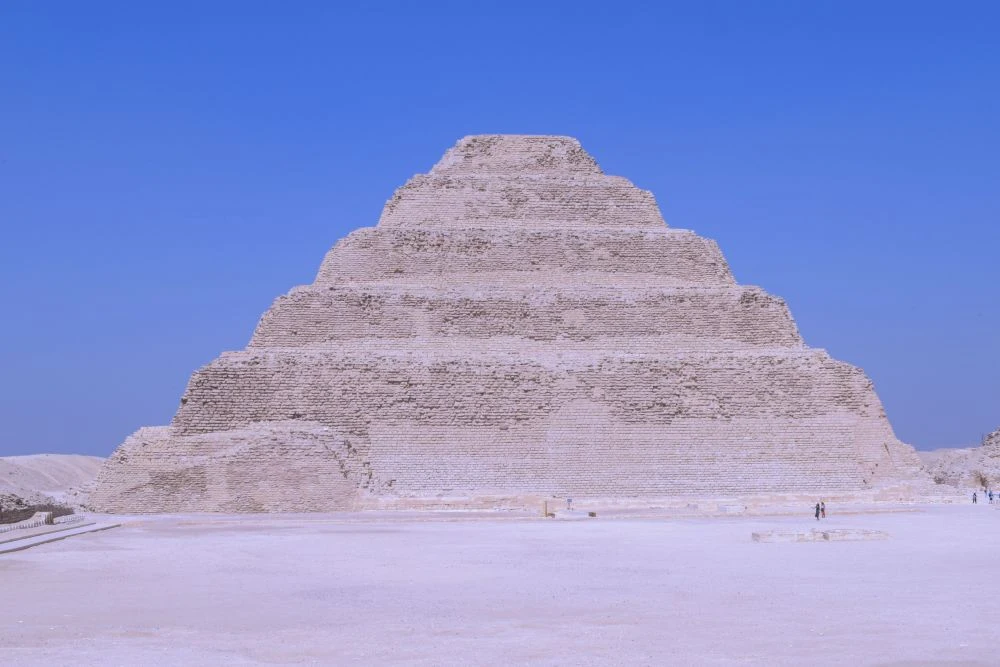
The Saqqara Pyramid, also known as the Step Pyramid of Djoser, is a monumental testament to the ingenuity and vision of ancient Egyptian civilization. As the world’s oldest stone pyramid, it marks a revolutionary leap in architectural design and remains a captivating symbol of Egypt’s rich heritage. This incredible structure continues to inspire awe for [...]
The chance to go inside Saqqara Pyramid is one of the most unforgettable experiences in Egypt. While millions of travelers head straight to the famous Pyramids of Giza, Saqqara offers a far more immersive journey into the origins of pyramid construction and the birth of one of the world's greatest civilizations. Located about 30 kilometers (19 miles) south of Cairo, this vast archaeological site is home to the Step Pyramid of Djoser, widely recognized as the oldest large-scale stone structure ever built. Walking through its ancient corridors allows visitors to experience history from a perspective that few destinations can offer.
Unlike many historical attractions that can only be admired from the outside, exploring inside Saqqara Pyramid reveals the remarkable engineering achievements of ancient Egyptian architects over 4,600 years ago. Narrow passageways, underground chambers, royal courtyards, ceremonial structures, and nearby tombs decorated with vivid hieroglyphics provide an extraordinary glimpse into the beliefs, technology, and daily life of the Old Kingdom. Every stone reflects a turning point in architectural history, making Saqqara much more than a pyramid—it is the foundation upon which Egypt's monumental legacy was built.
Recent restoration projects have also transformed the visitor experience. Areas that remained inaccessible for decades have reopened, allowing travelers to explore sections of the Step Pyramid complex while preserving this invaluable UNESCO World Heritage Site for future generations. Combined with improved visitor facilities and ongoing archaeological discoveries, there has never been a better time to experience inside Saqqara Pyramid and appreciate why historians consider it one of the most influential monuments in human history.
In this comprehensive guide, you'll discover everything you need to know before visiting inside Saqqara Pyramid. We'll explore the fascinating history of Saqqara, explain why the Step Pyramid revolutionized architecture, introduce the genius architect Imhotep, highlight the site's must-see attractions, uncover the mysteries surrounding the Serapeum, compare Saqqara with Giza and Dahshur, and provide practical travel tips to help you plan an unforgettable visit. This guide is designed to give you both historical insight and practical information, ensuring you make the most of your journey into Ancient Egypt.
Where Is Saqqara?
Located approximately 30 kilometers (19 miles) south of downtown Cairo, Saqqara is one of Egypt's most important archaeological treasures and forms part of the vast Memphis Necropolis, a UNESCO World Heritage Site. Although many visitors associate ancient Egypt with the iconic Giza Pyramids, the journey inside Saqqara Pyramid reveals an even older chapter of Egyptian history—one that laid the foundation for every pyramid built afterward.
Saqqara served as the official cemetery of Memphis, the first capital of Ancient Egypt, for more than 3,000 years. Rather than being home to a single monument, the site stretches across a vast desert plateau filled with pyramids, royal tombs, mastabas, temples, ceremonial courtyards, and underground burial complexes. Archaeologists continue to make remarkable discoveries here, proving that Saqqara still holds countless secrets beneath its sands.
Its strategic location on the western bank of the Nile was no coincidence. Ancient Egyptians believed the west represented the land of the dead because the sun disappeared below the western horizon each evening. As a result, kings, nobles, priests, and high-ranking officials were buried in this sacred desert landscape, transforming Saqqara into one of the world's largest and oldest necropolises.
How Far Is Saqqara from Cairo and Giza?
One of the reasons Saqqara is becoming increasingly popular is its accessibility. The site is close enough to Cairo to be visited comfortably on a half-day or full-day excursion while still offering a quieter atmosphere than the crowded Giza Plateau.
Approximate travel distances include:
- Downtown Cairo: 30 km (19 miles) – around 45 to 60 minutes by car.
- Giza Pyramids: 20 km (12 miles) – approximately 30 to 40 minutes.
- Dahshur: 10 km (6 miles) – about 15 to 20 minutes.
- Ancient Memphis: 4 km (2.5 miles) – less than 10 minutes.
Because these historic sites are located close together, many travelers combine Saqqara, Memphis, and Dahshur into a single day trip. This itinerary offers a fascinating timeline of pyramid development, beginning with the revolutionary Step Pyramid, continuing to the Bent and Red Pyramids at Dahshur, and ending with the masterpieces at Giza.
Why Is Saqqara Famous?
Saqqara is internationally recognized for housing the Step Pyramid of Djoser, the world's oldest surviving large-scale stone monument. Constructed around 2670 BCE, it marked the first successful attempt to build a monumental stone pyramid and forever changed the course of architecture.
However, the appeal of inside Saqqara Pyramid extends far beyond its age. Visitors come to experience a site that showcases the evolution of pyramid construction, religious beliefs, and funerary traditions across multiple dynasties. The underground chambers, ceremonial courtyards, and surrounding monuments illustrate how Egyptian architects gradually perfected the techniques that later produced the smooth-sided pyramids of Giza.
Saqqara is also famous for several extraordinary attractions, including:
- The Step Pyramid of Djoser, considered the birthplace of pyramid architecture.
- The Pyramid of Unas, home to the oldest known Pyramid Texts ever discovered.
- The mysterious Serapeum, featuring massive granite sarcophagi that continue to fascinate historians and archaeologists.
- Beautifully preserved mastaba tombs decorated with colorful reliefs depicting scenes of everyday life in Ancient Egypt.
- The Imhotep Museum, where visitors can explore artifacts recovered from decades of archaeological excavations.
The History of Saqqara
The story of inside Saqqara Pyramid begins more than 4,600 years ago, long before the Great Pyramid of Giza became the symbol of Ancient Egypt. Saqqara was the principal cemetery of Memphis, the first capital of the Egyptian kingdom, and remained an active burial ground for kings, nobles, priests, and high-ranking officials for over three millennia. This extraordinary continuity makes Saqqara one of the longest-used necropolises in the ancient world.
Unlike many archaeological sites that represent a single period in history, Saqqara preserves evidence of Egypt's architectural, religious, and political evolution across numerous dynasties. Every monument, tomb, and pyramid reflects changes in royal traditions, engineering techniques, and beliefs about the afterlife. Exploring inside Saqqara Pyramid allows visitors to witness the earliest stages of these remarkable developments.
Origins of the Necropolis
Before pyramids dominated Egypt's skyline, elite Egyptians were buried in rectangular mudbrick tombs known as mastabas. These flat-roofed structures covered underground burial chambers and offered space for offerings, religious ceremonies, and inscriptions honoring the deceased.
As Memphis grew into the political and administrative heart of Ancient Egypt during the Early Dynastic Period, the surrounding desert at Saqqara naturally became its royal cemetery. The location on the west bank of the Nile followed the Egyptian belief that the setting sun symbolized death and rebirth, making the western desert the ideal resting place for the dead.
Over time, hundreds of mastabas were constructed across the plateau for members of the royal family, government officials, military leaders, and priests. Many of these tombs still contain remarkably preserved reliefs and inscriptions that provide valuable insight into everyday life, agriculture, religious rituals, trade, and craftsmanship in Ancient Egypt.
Saqqara During the Old Kingdom
Saqqara entered its most significant period during the Third Dynasty (around 2670 BCE), when Pharaoh Djoser commissioned an ambitious monument unlike anything the world had ever seen. Rather than constructing another traditional mastaba, his architect envisioned a revolutionary design that stacked several mastabas of decreasing size on top of one another, creating the world's first pyramid.
This bold innovation transformed Egyptian architecture forever.
The completion of the Step Pyramid marked the beginning of an era in which pyramids became the ultimate symbols of royal authority and divine power. Over the following centuries, Egyptian builders refined these early ideas, eventually producing the smooth-sided pyramids that reached their greatest expression at Giza.
Visitors exploring inside Saqqara Pyramid can still observe many architectural features that reveal this experimental phase. Passageways, chambers, and structural elements demonstrate how ancient engineers tested new construction techniques that would later become standard in pyramid design.
Why Saqqara Became Egypt's Royal Burial Ground
Saqqara's importance extended far beyond the reign of Djoser. For thousands of years, successive pharaohs continued building monuments throughout the necropolis, adding new pyramids, temples, and elaborate tombs that reflected changing artistic styles and religious beliefs.
Several factors contributed to Saqqara's lasting significance:
- Its proximity to Memphis, Egypt's political and economic capital.
- Its sacred desert location, associated with the journey to the afterlife.
- Its established religious traditions, which attracted generations of rulers and nobles.
- Its expanding funerary complexes, allowing each dynasty to build upon the achievements of earlier kings.
As a result, Saqqara became home to monuments from multiple periods of Egyptian history, including the pyramids of Unas, Teti, and several later rulers. Even after royal burials shifted to other locations, wealthy officials continued choosing Saqqara as their final resting place because of its immense religious prestige.
Today, archaeologists continue uncovering new tombs, statues, sarcophagi, and burial shafts throughout the site. These ongoing discoveries reinforce Saqqara's reputation as one of Egypt's richest archaeological landscapes and remind visitors that the history hidden inside Saqqara Pyramid is only one chapter of a much larger story that is still unfolding beneath the desert sands.
Who Was King Djoser?
King Djoser was the second ruler of Egypt's Third Dynasty and is remembered as one of the country's greatest visionary pharaohs. During his reign, Egypt enjoyed political stability, economic prosperity, and remarkable advances in administration and construction.
Rather than building a conventional royal tomb, Djoser sought to create a monument unlike anything previously attempted. His ambitious project reflected both his royal authority and the growing sophistication of Egyptian society.
Although relatively little is known about his personal life, Djoser's legacy lives on through the monument that bears his name. More than 4,600 years after its construction, millions of visitors continue traveling to Saqqara to admire the world's first pyramid and discover what lies inside Saqqara Pyramid.
Why the Step Pyramid Is the World's Oldest Pyramid
Before Djoser's reign, Egyptian rulers were buried beneath rectangular mastaba tombs made primarily of mudbrick. While these structures served their purpose as royal burial places, they lacked the monumental scale that later became associated with Egyptian kingship.
The Step Pyramid completely transformed this tradition.
Architects began by constructing a large stone mastaba before repeatedly enlarging it and adding additional layers on top. Eventually, six stacked terraces formed the iconic stepped appearance that still dominates the Saqqara landscape today.
This achievement introduced several groundbreaking innovations:
- The first monumental building constructed entirely from cut limestone.
- The earliest successful large-scale pyramid ever built.
- A revolutionary use of stone architecture instead of mudbrick.
- The beginning of Egypt's pyramid-building tradition.
The success of this ambitious experiment encouraged later pharaohs to continue improving pyramid design. Over the following decades, builders refined construction techniques at sites like Dahshur before ultimately creating the smooth-sided pyramids of Giza.
Without the success of Djoser's monument, the iconic pyramids that define Ancient Egypt today might never have existed.
How the Step Pyramid Changed Ancient Egyptian Architecture
The influence of the Step Pyramid extended far beyond its impressive height. It fundamentally changed Egyptian architecture, engineering, and royal funerary traditions for centuries to come.
One of its greatest innovations was the use of carefully cut limestone blocks arranged in large-scale architectural forms. This technique demonstrated that stone could be used not only for temples and decorative features but also for enormous permanent monuments capable of surviving for millennia.
The pyramid also became the centerpiece of an enormous ceremonial complex covering approximately 15 hectares (37 acres). Within this enclosure were temples, ceremonial courtyards, shrines, gateways, and ritual spaces designed to support the king's eternal life in the afterlife.
Many architectural elements first introduced here later became standard features in royal pyramid complexes, including:
- Monumental entrance colonnades.
- Large ceremonial courtyards.
- Protective enclosure walls.
- Religious shrines representing different regions of Egypt.
- Underground galleries and burial chambers.
- Symbolic spaces used during royal festivals.
Perhaps most importantly, the Step Pyramid proved that ambitious architectural projects could unite thousands of workers under centralized planning. The knowledge gained during its construction laid the foundation for the engineering techniques that later produced Egypt's greatest monuments.
Today, anyone exploring inside Saqqara Pyramid witnesses the origins of these innovations firsthand. From the underground passageways to the surrounding ceremonial complex, every section of the monument reflects the creativity and ambition that transformed Ancient Egypt into one of history's greatest civilizations.
How Long Do You Need to Visit Saqqara?
One of the most important questions travelers ask before planning their itinerary is how much time they should dedicate to exploring Saqqara. The answer depends largely on the type of experience they are looking for, as this remarkable archaeological site is far more extensive than many visitors initially expect. While some tourists come primarily to explore inside Saqqara Pyramid and admire the Step Pyramid of Djoser, others wish to discover the surrounding tombs, museums, underground galleries, and ceremonial complexes that together tell the story of more than 3,000 years of Ancient Egyptian history.
Because the site covers a vast desert plateau containing numerous monuments spread across several sections, rushing through the visit often means missing some of Saqqara's most fascinating attractions.
For visitors with a genuine interest in archaeology, architecture, or Ancient Egyptian civilization, allocating an entire day provides the opportunity to appreciate both the historical significance and the extraordinary engineering achievements that make Saqqara one of the world's most important archaeological destinations.
How to Get to Saqqara
Reaching Saqqara is relatively easy thanks to its convenient location approximately 30 kilometers south of central Cairo. Although the archaeological site is situated in the desert, modern transportation options allow visitors to travel there comfortably from both Cairo and Giza. Whether you prefer the convenience of a private driver, the affordability of public transportation, or the educational value of a guided tour, several options are available to suit different travel styles and budgets.
- Private Car
Hiring a private car with a professional driver is widely regarded as the most convenient and comfortable way to reach Saqqara, particularly for travelers who want maximum flexibility during their day trip. A private vehicle allows visitors to explore inside Saqqara Pyramid at their own pace without worrying about transportation schedules, while also making it easy to combine Saqqara with nearby archaeological sites such as Memphis and Dahshur. Most hotels in Cairo can arrange private transportation, and many drivers are familiar with the best routes and visitor facilities around the archaeological zone.
- Taxi
Taxis and ride-hailing services such as Uber provide another convenient option for reaching Saqqara, especially for independent travelers staying in Cairo or Giza. The journey usually takes between 45 minutes and one hour depending on traffic conditions, making it an easy day trip from the city. Since taxis may not always be available outside the archaeological site later in the day, visitors are advised to arrange their return transportation before beginning their exploration of inside Saqqara Pyramid.
- Guided Tours
For first-time visitors, joining a guided tour is often the best way to experience Saqqara because it combines convenient transportation with expert historical interpretation. Most organized tours include hotel pickup and drop-off, entrance assistance, transportation between monuments, and the services of a licensed Egyptologist who can explain the historical significance of the Step Pyramid, the surrounding tombs, and the many archaeological discoveries that continue to reshape our understanding of Ancient Egypt. Many tours also combine Saqqara with Memphis and Dahshur, creating a comprehensive introduction to Egypt's earliest pyramids.
- Public Transportation
Budget-conscious travelers can also reach Saqqara using public transportation, although this option requires more planning and patience. Visitors typically begin by taking the Cairo Metro or a public bus toward Giza before transferring to a local minibus or taxi for the final part of the journey. Although this is the least expensive transportation option, it is generally less convenient than hiring a private vehicle, particularly for travelers unfamiliar with Cairo's transportation network or those planning to spend several hours exploring the extensive archaeological site.
Nearby Attractions
Many travelers combine Saqqara with other nearby archaeological sites to create an unforgettable day trip.
Dahshur
Located only about 15 minutes away, Dahshur is famous for:
- Bent Pyramid
- Red Pyramid
Unlike many pyramids, visitors can still enter both structures, making Dahshur an excellent complement to exploring inside Saqqara Pyramid.
Memphis
Just a few kilometers from Saqqara lies the ancient city of Memphis, once the capital of Egypt.
Highlights include:
- Colossal Statue of Ramesses II
- Alabaster Sphinx
- Open-air museum
Although little of the ancient city remains above ground, Memphis provides valuable historical context for understanding Saqqara.
Giza Pyramids
About 30–40 minutes north lies Egypt's most famous archaeological site.
The Giza Plateau features:
- Great Pyramid of Khufu
- Pyramid of Khafre
- Pyramid of Menkaure
- Great Sphinx
Visiting Saqqara before Giza allows travelers to see how pyramid construction evolved from its earliest stages into architectural perfection.
Visitor Tips
Planning ahead helps ensure a comfortable and enjoyable visit.
What to Wear
Choose clothing suitable for walking in the desert.
Recommended items include:
- Lightweight breathable clothing
- Comfortable walking shoes
- Hat or cap
- Sunglasses
- Sunscreen
Closed shoes are recommended because many areas have uneven stone surfaces.
What to Bring
Essential items include:
- Water bottle
- Camera
- Portable charger
- Small backpack
- Cash for tickets or souvenirs
- Identification
Because the site covers a large area, staying hydrated is especially important.
Photography Rules
Photography is generally permitted throughout much of Saqqara.
However:
- Flash photography may be prohibited inside certain tombs.
- Tripods may require special permission.
- Some monuments have separate photography fees.
Always follow the instructions provided by site staff.
Safety Tips
Saqqara is considered a safe destination for tourists.
To ensure a pleasant visit:
- Stay on marked paths.
- Respect restricted areas.
- Avoid climbing monuments.
- Carry enough drinking water.
- Visit with a guide if exploring the larger necropolis for the first time.
Frequently Asked Questions
Is Saqqara worth visiting?
Absolutely. Saqqara offers one of Egypt's richest archaeological experiences. It combines ancient history, impressive architecture, beautifully decorated tombs, and fewer crowds than Giza, making it a must-visit destination for anyone interested in Ancient Egypt.
Can you enter the Step Pyramid?
Yes. Following extensive restoration work, visitors can once again explore inside Saqqara Pyramid when the interior is open to the public. Access may occasionally be restricted for conservation purposes.
How old is Saqqara?
Saqqara dates back more than 4,600 years. The Step Pyramid of Djoser was built around 2670 BCE, making it the oldest surviving large-scale stone monument in the world.
Conclusion
Visiting inside Saqqara Pyramid is much more than exploring an ancient monument. it is an opportunity to witness the birthplace of pyramid architecture and the foundations of one of history's greatest civilizations. From the revolutionary Step Pyramid of Djoser and the brilliance of Imhotep to the richly decorated tombs, the mysterious Serapeum, and the earliest royal inscriptions, every corner of Saqqara tells a remarkable story of innovation, faith, and engineering excellence.