
Travel Guide
The Ultimate Guide to a Solo Traveler Nile Cruise: Is It Safe and Worth It?
19 min read
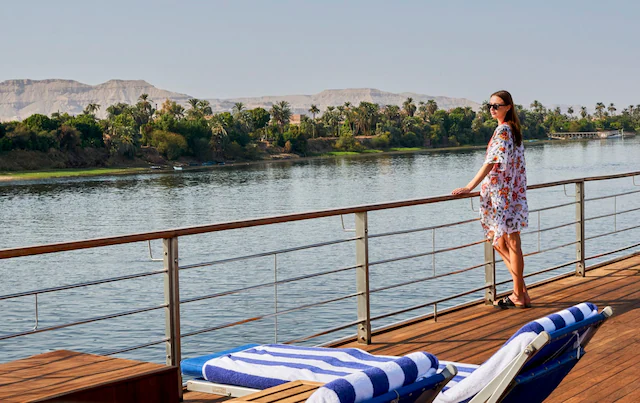
Embarking on a journey through the heart of Egypt alone is an exhilarating prospect, yet it often comes with a wave of hesitation. Is it safe? Will it be lonely? How do I navigate the logistics? For independent adventurers looking to blend thousands of years of history with modern comfort, a solo traveler Nile cruise emerges as the absolute gold standard.
Sailing between the historic cities of Luxor and Aswan offers a secure, socially engaging, and entirely stress-free environment. It provides a unique vantage point that land tours simply cannot match, turning the daunting task of independent planning into a seamless, luxurious voyage.
This comprehensive, ultimate guide dives deep into everything you need to know about navigating the Nile alone—from hidden safety measures and budget strategies to cultural nuances and choosing the perfect vessel.
What Exactly is a Solo Traveler Nile Cruise?
Unlike traditional independent backpacking, where you spend hours managing train schedules, hailing erratic taxis, and coordinating hotel check-ins, a Nile cruise streamlines your entire Egyptian itinerary. It functions as a floating boutique hotel that combines your transportation, luxury accommodation, fine dining, and guided sightseeing into one cohesive package.
When you book a Nile cruise as a solo traveler, you retain your absolute independence while shedding the logistical exhaustion. You have the luxury of your own private cabin—complete with floor-to-ceiling windows overlooking the changing river landscapes—while sharing meals and temple excursions with a small, curated group of international travelers. It bridges the gap between solitary exploration and community-centric travel, allowing you to build lifelong connections without sacrificing your personal space.
Is a Nile Cruise Safe for Solo Travelers?
The short answer is an empathetic yes. In fact, a Nile river cruise is statistically one of the safest ways to experience Upper Egypt as an independent voyager.
A Controlled, Monitored Environment
The Egyptian government and tourism authorities place an incredibly high priority on maritime and site safety. Cruise ships operate within a tightly controlled ecosystem:
Passenger Manifests & Tourism Police: Every vessel maintains strict manifests synchronized with local tourism police checkpoints along the river banks.
24/7 Onboard Security: Ships are equipped with round-the-clock security personnel, secure docking locations, and highly trained staff who treat solo guests with an extra layer of protective hospitality.
Safety in Numbers During Excursions
The moment you step off the boat to explore a monument, you are not left to fend for yourself. Excursions are conducted in structured groups led by certified, licensed Egyptologists. This group dynamic completely eliminates the common anxieties of solo travel, such as getting lost in unfamiliar towns or feeling overwhelmed by aggressive street vendors outside the temple gates. You have a professional guide navigating the crowd for you, ensuring your peace of mind from sunrise to sunset.
Empowering Solo Female Travelers in Egypt
The search volume for safety tips tailored specifically to solo female travelers in Egypt is immense, and for good reason. Traveling the world as an independent woman requires a strategic approach, and the Nile cruise environment offers an incredibly empowering and safe sanctuary.
However, understanding local cultural expectations is key to ensuring a smooth, respectful, and confident journey.
Navigating the Local Dress Code
Egypt is a conservative, predominantly Muslim country. While clothes like shorts and crop tops are perfectly acceptable on the sun deck of your cruise ship while sunbathing, you must dress modestly when stepping ashore for temple excursions or market walks.
The Golden Rule: Keep your shoulders and knees covered.
Ideal Wardrobe: Loose-fitting linen trousers, maxi dresses, midi skirts, and breathable cotton t-shirts. Always carry a lightweight scarf or pashmina in your daypack; it is incredibly versatile for shielding your skin from the intense desert sun and covering up when visiting historic mosques or traditional villages.
In bustling areas like the Luxor Bazaar or outside Edfu Temple, solo female travelers will naturally attract attention from local vendors eager to sell souvenirs. The key to managing this is unwavering confidence and body language:
Wear Sunglasses: This limits direct eye contact, which vendors often interpret as an invitation to strike up a long conversation.
The Power of "La, Shukran": If someone approaches you, do not hesitate, look uncomfortable, or ignore them completely. Look them in the eye, say a firm, polite "La, Shukran" (No, thank you) with a hand over your heart, and keep walking with purpose.
Lean on Your Cruise Group: Remember, during your cruise, you will always be walking alongside your guide and fellow passengers, which naturally deters any persistent or unwanted hassle.
Dahabiya vs. Large Cruise Ships: Which is Best for You?
One of the most critical decisions a solo adventurer must make is choosing the type of vessel. On the Nile, the experience varies dramatically between a massive floating resort and a traditional wooden sailing boat
To help you decide which environment matches your solo travel personality, let’s break down the core differences:
| Feature | Large Luxury Cruise Ships | Traditional Dahabiya Boats |
| Social Environment | High Energy & Diverse. Perfect for extroverted solo travelers who want to mingle with large groups, enjoy nightly discos, and meet people from all walks of life. | Intimate & Community-Focused. Ideal for introverts or travelers seeking quiet contemplation, deep conversations, and close bonding with a tiny group. |
| Pace of Sailing | Fast & Scheduled. Powered by large engines, these ships move quickly between major ports, adhering to a strict, synchronized timetable. | Slow & Serene. Relying purely on wind power (and a gentle tugboat when the river is calm), the pace is meditative, quiet, and completely relaxing. |
| Itinerary Flexibility | Standard Highlights. Docks at major, bustling ports like Luxor, Edfu, Kom Ombo, and Aswan alongside other large vessels. | Exclusive Off-Grid Access. Because of their small size, Dahabiyas can dock at remote islands and ancient quarries (like Speos Artemidos) that large ships cannot physically reach. |
| Onboard Amenities | Extensive. Features swimming pools, multi-level sundecks, fitness centers, spas, gift shops, and massive buffet halls. | Boutique & Tailored. Features a single, luxurious wooden sun deck, a shared dining table, and personalized, hyper-attentive service from a dedicated crew. |
Mastering the Local Culture: Baksheesh and Haggling
For an independent traveler, dealing with money outside the structured environment of the ship can occasionally cause anxiety. Two concepts dictate daily commerce in Egypt: Baksheesh (tipping) and Haggling (negotiation). Mastering them will transform your interactions from stressful to deeply rewarding.
Understanding Baksheesh (Tipping Culture)
In Egypt, Baksheesh is not simply a bonus for exceptional service; it is an integral, deeply rooted socioeconomic system. Wages in the hospitality industry are low, and tipping is a primary source of income that supports local families. As a solo traveler, carrying a small pouch filled with small-denomination Egyptian Pounds (EGP 10, 20, 50, and 100 notes) is essential.
Who to Tip and How Much:
Temple Bathroom Attendants: EGP 10 to 20.
Luggage Handlers/Porters: EGP 50 to 100.
Drivers for Day Trips: EGP 150 to 300 per day.
Your Main Egyptologist Guide: EGP 200 to 400 per day (usually given at the very end of the cruise in an envelope).
The Ship’s Crew Tip Box: Most cruises collect a unified tip at the end of the journey (usually around $10 to $15 per day) which is split evenly among the invisible heroes—the kitchen staff, cleaners, and sailors.
The Art of Hassle-Free Haggling
When visiting markets like the Aswan Souk or the shops surrounding the Pyramids, prices are rarely fixed. Haggling is expected, and it should be treated as a lighthearted, friendly game rather than a hostile argument.
Never Show Too Much Enthusiasm: If you see a beautiful handmade alabaster vase or a silver cartouche, look at it casually. Showing extreme excitement gives the vendor immediate leverage.
Let Them Name the First Price: Ask "Kam?" (How much?). Whatever price they quote, mentally cut it in half or by 60% to formulate your counter-offer.
Keep it Polite and Smiley: Joke with the vendor. If they refuse your price, politely walk away. Nine times out of ten, if your offer was reasonable, they will follow you out of the shop to accept it. If not, don't worry—the exact same souvenir is likely available at three other shops down the street.
Prime Sailing Routes and Seasonal Timing
To extract the maximum value from your voyage, you need to sync your cruise route with the optimal season for Egyptian travel.
Classic Cruise Itineraries
Luxor to Aswan (4 Nights): The most highly recommended route for solo travelers. Moving south against the current, this route offers a gentle introduction to Upper Egypt, building up in historical intensity before arriving in the gorgeous Nubian landscape of Aswan.
Aswan to Luxor (3 Nights): A slightly faster, action-packed itinerary. It is ideal for independent travelers who are on a tighter schedule but still want to check the essential temples off their bucket list.
The Long Nile Cruise (Cairo to Aswan - 10 to 14 Days): A rare, epic journey. This is perfect for the slow-traveling solo explorer who wants to see "hidden Middle Egypt" archaeological sites like Abydos and Dendera that standard tourists completely bypass.
The Best Months to Travel
The climate of Upper Egypt dictates the ideal travel window. Temperatures in the south can be drastically hotter than in Cairo.
Peak Season (October to April): The absolute best time to sail. Daytime temperatures hover between a gorgeous 20°C to 25°C (68°F to 77°F). Exploring massive stone temples like Karnak or the Valley of the Kings is highly comfortable, and the ship’s sundeck offers a refreshing breeze.
The Shoulder Months (May and September): Great for budget-conscious solo travelers. Prices drop significantly, and the ships are less crowded, though you must prepare for midday heat approaching 35°C (95°F).
The Summer Low Season (June to August): Avoid if possible. Temperatures routinely cross 40°C (104°F) in Luxor and Aswan, making outdoor sightseeing before sunset physically exhausting.
Budgeting and Managing the "Single Supplement" Fee
A major hurdle for independent adventurers globally is the notorious Single Supplement—a fee charged by cruise lines and hotels to compensate for one person occupying a room designed for two. Because cruise pricing is traditionally based on double occupancy, solo travelers can sometimes face a 50% to 100% surcharge on standard cabin rates.
How to Bypass the Solo Surcharge
Look for "No-Supplement" Promotions: Many premium operators run special seasonal deals (particularly in October, January, and May) where they completely waive the single supplement fee to fill remaining cabins.
Book Dedicated Single Cabins: A select number of modern, luxury Nile cruise ships and boutique Dahabiyas are now structurally designed with dedicated single cabins. These are priced perfectly for the solo budget without any hidden fees.
Value-Inclusivity Analysis: When analyzing your travel budget, look at the big picture. Even with a slight supplement, a Nile cruise bundles your meals, accommodation, multi-city transport, and tour guide fees into one predictable price. When compared to paying for individual hotels, domestic flights, private drivers, and entrance tickets independently, the cruise remains incredibly cost-effective.
Why Choose Desert Cruise Travel for Your Solo Voyage?
At Desert Cruise Travel, we fundamentally believe that solo travel should be defined by absolute freedom, never by isolation. We specialize in crafting a protective, worry-free environment where you can fully immerse yourself in the magic of ancient Egypt while we seamlessly handle the logistics behind the scenes.
Solo-Centric Onboard Support: From the moment you land, we provide dedicated support. We coordinate private, secure airport pickups, manage seamless check-ins, and ensure the ship’s crew provides personalized attention to your comfort.
Handpicked, Fully Insured Vessels: We only partner with cruise lines and Dahabiyas that maintain the absolute highest standards of maritime safety, hygiene, and hospitality training.
Expert Storyteller Guides: You won't just look at broken stones. Our certified Egyptologists are chosen for their passion, charismatic storytelling, and unique ability to make history come alive for individual explorers.
Worry-Free Administrative Management: Security permits, entrance tickets, tipping logistics, and transfers are entirely managed by our team, leaving you free to relax on the sun deck with a cold drink as the pharaonic landscape glides by.
Frequently Asked Questions
- Is it easy to make friends on a Nile cruise if I am traveling alone?
Yes, it is practically effortless. Because everyone shares the same meal times in the dining room, relaxes on the same sun deck, and explores temples together in small groups, a natural and warm community forms within the first 24 hours. You will find yourself sharing stories over afternoon tea or enjoying the evening cultural shows with a wonderful group of international friends.
- Can the cruise accommodate specific dietary requirements for a single traveler?
Absolutely. Modern cruise ships on the Nile feature world-class culinary teams. Whether you are vegetarian, vegan, gluten-free, or have specific allergies, the onboard chefs can easily customize your meals. Simply notify Desert Cruise Travel during your booking process so our team can coordinate with the ship's kitchen ahead of your arrival.
- Will I have internet access while sailing between Luxor and Aswan?
Most modern cruise ships offer onboard Wi-Fi, typically accessible in the main lobby or the lounge bar. However, because the ship travels through rural stretches of Upper Egypt, the satellite connection can occasionally be slow or intermittent. For a seamless digital experience, we highly recommend purchasing a local Egyptian eSIM or physical SIM card (from providers like Vodafone or Orange) upon your arrival at Cairo or Luxor airport.
Conclusion
The temples of the Pharaohs have stood for millennia, and there is no grander way to approach them than by sailing along the historic waters that birthed Egyptian civilization. Don't put off seeing the world because you are waiting for a travel partner; the Nile is meant to be experienced with the clarity, introspection, and absolute wonder that only solo travel provides.