
Travel Guide
Marvel at the Aswan High Dam: The Ultimate Visitor & Engineering Guide
9 min read
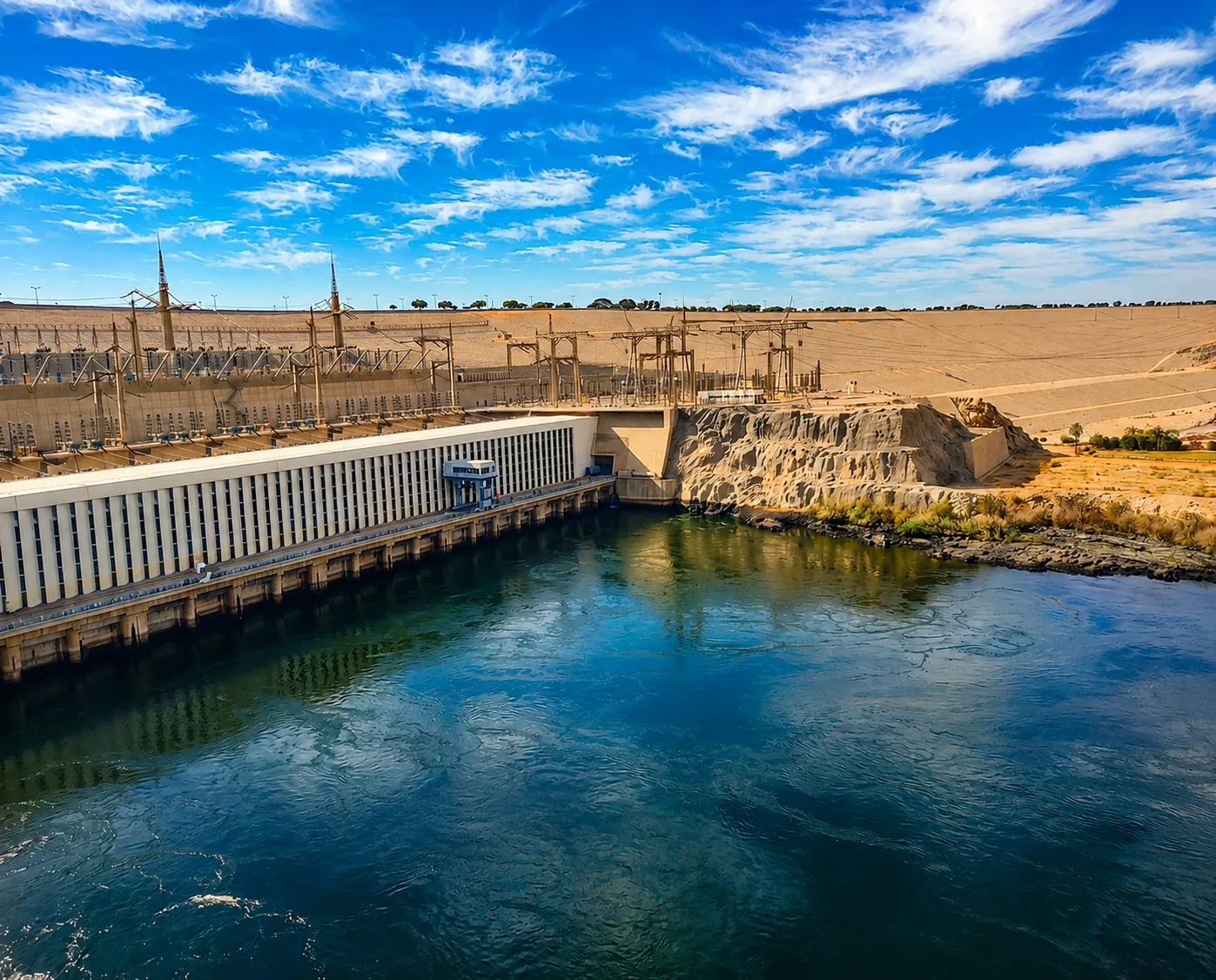
The Aswan High Dam (known in Arabic as As-Sadd al-Aali) stands as one of the most monumental engineering achievements of the 20th century. It is a striking physical manifestation of modern Egypt’s industrial leap and political sovereignty. Completed in 1970, this massive rock-fill embankment dam completely tamed the wild cycles of the Nile River, reshaping the geography, economy, and daily life of North Africa.
Beyond its concrete, sand, and granite foundations, the Aswan High Dam represents a fascinating crossroads where ancient history, Cold War geopolitics, and cutting-edge hydraulic engineering converge. For travelers exploring Upper Egypt, a visit to this mega-structure offers a profound look into how modern humans managed to control the world's longest river.
Whether you are capturing panoramic views from its sweeping crest, analyzing its intricate technical design, or stopping by during a luxury Nile cruise excursion, this comprehensive guide provides the deep historical context, engineering secrets, and up-to-date 2026 visitor logistics you need to fully appreciate this modern wonder.
Essential Technical & Structural Specifications
To fully comprehend the sheer scale of the Aswan High Dam, it helps to look at the raw data behind its construction. Built across the Nile at its narrowest point near the First Cataract, just 13 kilometers south of Aswan city, the dam acts as an impenetrable barrier holding back trillions of gallons of water.
The structure is a rock-fill design, chosen specifically for its ability to settle safely over the river’s solid granite bedrock while providing maximum stability against potential seismic shifts. Rather than relying on a solid concrete gravity wall, it utilizes an impermeable central clay core flanked by millions of cubic meters of compacted sand, earth, and heavy rock quarried from the surrounding desert cliffs.
| Engineering Metric | Technical Value & Measurement |
| Dam Height | 111 meters (364 feet) above the river bed |
| Total Length | 3,830 meters (12,565 feet) stretching across the bank |
| Base Width | 980 meters (3,215 feet) wide at its foundation |
| Crest Width | 40 meters (131 feet) wide at the driving surface |
| Structural Volume | 43 million cubic meters of material (17 times the volume of the Great Pyramid) |
| Hydroelectric Capacity | 2,100 Megawatts (MW) via 12 specialized Soviet Francis turbines |
| Maximum Spillway Capacity | 11,000 cubic meters of water discharge per second |
The Historical Timeline: A Centuries-Old Dream of Control
Efforts to manage the unpredictable annual floods of the Nile River date back thousands of years. Ancient pharaohs constructed rudimentary stone dikes and irrigation canals, but the river regularly defied human boundaries, alternating between catastrophic floods that washed away whole villages and severe droughts that triggered widespread famine.
- Early Concepts and Stalled Visions
The earliest recorded scientific proposal to dam the Nile at Aswan dates back to the 9th century during the Fatimid Caliphate. The brilliant Arab polymath and engineer Ibn al-Haytham (Alhazen) claimed he could design a system to regulate the river's flow. However, upon traveling to the site south of Aswan and inspecting the wild rapids of the Nile cataract, he realized the project was far beyond the technological capabilities of his era and feigned madness to escape the Caliph's wrath.
In 1912, the Greek-Egyptian engineer Adrian Daninos submitted a formal blueprint for a massive new dam to the government of King Farouk. Despite its clear long-term benefits, the project was repeatedly shelved due to political instability, fiscal shortages, and the outbreak of World War II.
- The Post-1952 Revolution Push and Cold War Geopolitics
The turning point for the Aswan High Dam came following the Egyptian Revolution of 1952. Led by President Gamal Abdel Nasser, the new republican government viewed the construction of a mega-dam as an absolute necessity to achieve true economic independence and fuel nationwide industrialization.
The financing of the project quickly became a central flashpoint in Cold War geopolitics. In 1956, the United States and the United Kingdom abruptly withdrew their promised financial aid packages in response to Egypt’s growing diplomatic ties with communist bloc nations. Undeterred, President Nasser nationalized the Suez Canal to generate revenue, a bold move that triggered the Suez Crisis.
Ultimately, the Soviet Union stepped in to secure the project, providing a massive loan of $1.12 billion alongside elite teams of Russian engineers, machinery, and state-of-the-art heavy equipment. Formal construction officially launched on January 9, 1960, employing a massive workforce of over 34,000 workers, and the completed complex was officially inaugurated in the spring of 1971.
The Creation of Lake Nasser: Strategic Benefits
The primary byproduct of the Aswan High Dam is Lake Nasser, one of the largest man-made reservoirs on earth. Stretching over 5,500 square kilometers and extending all the way across the southern border into northern Sudan (where it is known as Lake Nubia), this massive inland sea holds up to 132 cubic kilometers of water.
The strategic benefits provided by this reservoir revolutionized modern Egyptian society:
Absolute Flood Control: The dam permanently ended the destructive annual Nile floods, protecting millions of homes, historic towns, and agricultural fields from being submerged.
Perennial Irrigation Security: By storing vast reserves of water inside Lake Nasser, Egypt can safely irrigate over 33,600 square kilometers of agricultural land year-round, guaranteeing food security even during multi-year sub-Saharan droughts.
Clean Hydroelectric Energy: The 12 massive generators integrated into the dam's power station initially supplied up to 50 percent of Egypt's total electrical grid, sparking rapid urban expansion, factory growth, and rural electrification programs nationwide.
The Socio-Environmental Cost and the UNESCO Rescue
No project of this unprecedented scale comes without profound environmental and human trade-offs. The creation of Lake Nasser completely flooded the historic lands of Lower Nubia, forcing the heart-wrenching displacement of more than 50,000 indigenous Nubian citizens, who were relocated to newly constructed villages like New Nubia, situated 45 kilometers from Aswan.
Furthermore, the dam dramatically altered the Nile’s natural ecosystem. By permanently trapping millions of tons of nutrient-rich volcanic silt behind its rock-fill walls, agricultural fields downstream lost their natural fertilization, requiring a heavy reliance on chemical alternatives. The lack of silt has also contributed to gradual coastal erosion along the Nile Delta where the river meets the Mediterranean Sea.
- The Miraculous Salvation of Antiquities
The rising waters of the reservoir also threatened to permanently submerge dozens of priceless Pharaonic temples. This impending cultural crisis prompted UNESCO to launch the greatest international archaeological rescue operation in human history.
Between 1960 and 1980, an alliance of scientists, engineers, and stonemasons from over 40 nations dismantled 22 ancient monuments block-by-block, reassembling them on higher ground out of the water's reach. Outstanding triumphs of this rescue campaign include:
Abu Simbel: The colossal rock-cut temples of Ramses II and Queen Nefertari were meticulously cut into thousands of multi-ton blocks and raised 65 meters up the desert cliffs.
Philae Temple: The sacred island sanctuary of the goddess Isis was completely salvaged from the rising waters between the Old and New Aswan dams and reconstructed on nearby Agilkia Island.
What to See When Visiting the Aswan High Dam
For travelers journeying to the top of the dam today, the site offers several key architectural landmarks and viewing platforms that provide spectacular perspective.
- The Lotus-Shaped Arab-Soviet Friendship Monument
Standing proudly near the western wing of the dam is the spectacular Monument of Arab-Soviet Friendship (also known as the Lotus Tower). Designed by Soviet architect Piotr Pavlov, this 75-meter-high concrete monument resembles five stylized petals of a lotus flower opening toward the sky.
Visitors can walk directly to the central viewing platform situated within the tower to enjoy panoramic views of the entire dam complex, the sweeping blue expanse of Lake Nasser to the south, and the flowing path of the Nile winding its way north toward Luxor.
Practical Visitor Logistics for the 2026 Season
To ensure a smooth and safe trip to the Aswan High Dam, travelers must stay updated on the latest operational security protocols and ticketing frameworks active for the 2026 travel season.
Operating Hours and Security Protocols
Because the dam is classified as a highly sensitive, critical national infrastructure site, security on-site is exceptionally tight. All visitors must pass through multiple police checkpoints and baggage screening matrices before entering the main crest driveway.
Opening Hours: Open daily from 9:00 AM to 5:00 PM.
Photography Rules: Standard smartphone photography is permitted from designated tourist viewing platforms. However, the use of professional DSLR/Mirrorless camera setups, tripods, and commercial filming gear is strictly prohibited without a specialized government permit. Drone photography is absolutely banned.
2026 Current Entry Ticket Pricing
| Ticket Category | Price in Egyptian Pounds (EGP) | Approximate Cost (USD) |
| Foreign Adult Ticket | 250 EGP | ~$5 USD |
| Foreign Student Ticket (ISIC Card Required) | 125 EGP | ~$2.50 USD |
| Egyptian Citizen Ticket | 50 EGP | ~$1 USD |
Frequently Asked Questions
Is the Aswan High Dam the same as the Old Aswan Dam?
No. The Old Aswan Dam (Aswan Low Dam) was constructed by the British between 1898 and 1902. It sits about 6 kilometers downstream (north) of the High Dam. While it was a major feat for its time, it proved too small to control the Nile's extreme floods, which ultimately led to the construction of the much larger Aswan High Dam in the 1960s.
Can you visit the Aswan High Dam as part of a Nile Cruise?
Yes, absolutely. Virtually all premium 3-night and 4-night Nile Cruises sailing between Aswan and Luxor include a dedicated half-day land excursion in Aswan. This tour typically combines a visit to the Aswan High Dam, a boat ride to Philae Temple, and an exploration of the ancient Unfinished Obelisk.
Can you cross the dam by car?
Yes. The top of the dam features a wide, paved multi-lane highway that connects the eastern and western banks of the Nile. Your tour vehicle or private taxi will drive directly across this crest road to take you to the main tourist pavilions and the Lotus Monument.
Conclusion
The Aswan High Dam remains a powerful, living symbol of Egyptian determination, masterfully uniting the ancient life-giving forces of the Nile with modern engineering to rewrite the country's destiny. From its massive industrial benefits to the delicate environmental balance it maintains, the dam offers a fascinating educational experience that goes far beyond simple concrete walls. To stand upon its crest is to witness the exact point where modern Egypt chose to build its future.